Scindapsus collector field guide
A rare Scindapsus may be scarce in one region, newly released from one nursery or difficult to verify under an informal name. None of those signals automatically means the plant is a rare species in the wild. Buy the evidence—name, source, roots, format and current plant—not the adjective alone.
- What is the name? Accepted species, cultivar/selection, `Scindapsus sp.` working label or seller nickname?
- What is scarce? The biological species, one pattern, one production line, one pot size or simply today’s stock?
- What is pictured? Exact plant, representative lot, parent plant or mature reference?
- What will arrive? Rooted plant, cutting, node, tissue-culture plantlet or imported bare-root material?
Species rarity and trade rarity are different claims
Kew currently recognizes Scindapsus as an accepted aroid genus with 36 accepted species, native across tropical and subtropical Asia, northern Australia and the western Pacific. A name on that accepted list is a taxonomic record. A horticultural label may instead describe a cultivar, selection, color pattern or unidentified species.
Conservation status requires a separate evidence chain. IUCN assessments consider taxonomy, geographic range, population, habitat, threats, use and trade. CITES has its own official checklist for taxa covered by international-trade controls. A high price, sold-out listing or “rare” product title is not an IUCN category or a CITES determination.
| Rarity claim | Useful evidence | What it does not establish |
|---|---|---|
| Low current stock | Dated inventory, batch size and restock history. | Global scarcity or conservation concern. |
| Slow production | Rooting time, propagation yield and production records. | That every seller’s plant is the same line. |
| Unusual phenotype | Whole plant, stem/nodes and several sequential leaves. | Stability, genotype or accepted species. |
| Rare in the wild | A current, taxon-specific conservation assessment and distribution data. | Availability of cultivated stock. |
| Trade-restricted | Exact scientific name checked against current law/CITES and destination rules. | That the word “rare” creates a permit requirement. |
Read the name hierarchy before comparing prices
A two-part accepted species name can be checked against a taxonomic backbone. `Scindapsus sp.` means the genus is supplied but the species is not stated or confirmed. A word such as “Silver Tattoo,” “Moonlight Albo” or “Satin Jade” may function as a horticultural trade name. Keep the whole label rather than upgrading it into a species or merging similar-looking names.
| Label form | Reasonable reading | Buyer check |
|---|---|---|
| Scindapsus pictus | Accepted genus + species combination. | Confirm cultivar/selection and current plant separately. |
| Scindapsus sp. + name | Genus-level working ID plus a trade/field label. | Preserve `sp.`; ask for source history rather than inventing a species. |
| Selection/cultivar name | A horticultural line chosen for visible traits. | Compare multiple leaves, stem, provenance and seller naming. |
| Nickname only | A search and sales handle. | Request genus/species status and a current plant photo. |
Four authentic photos, four kinds of evidence
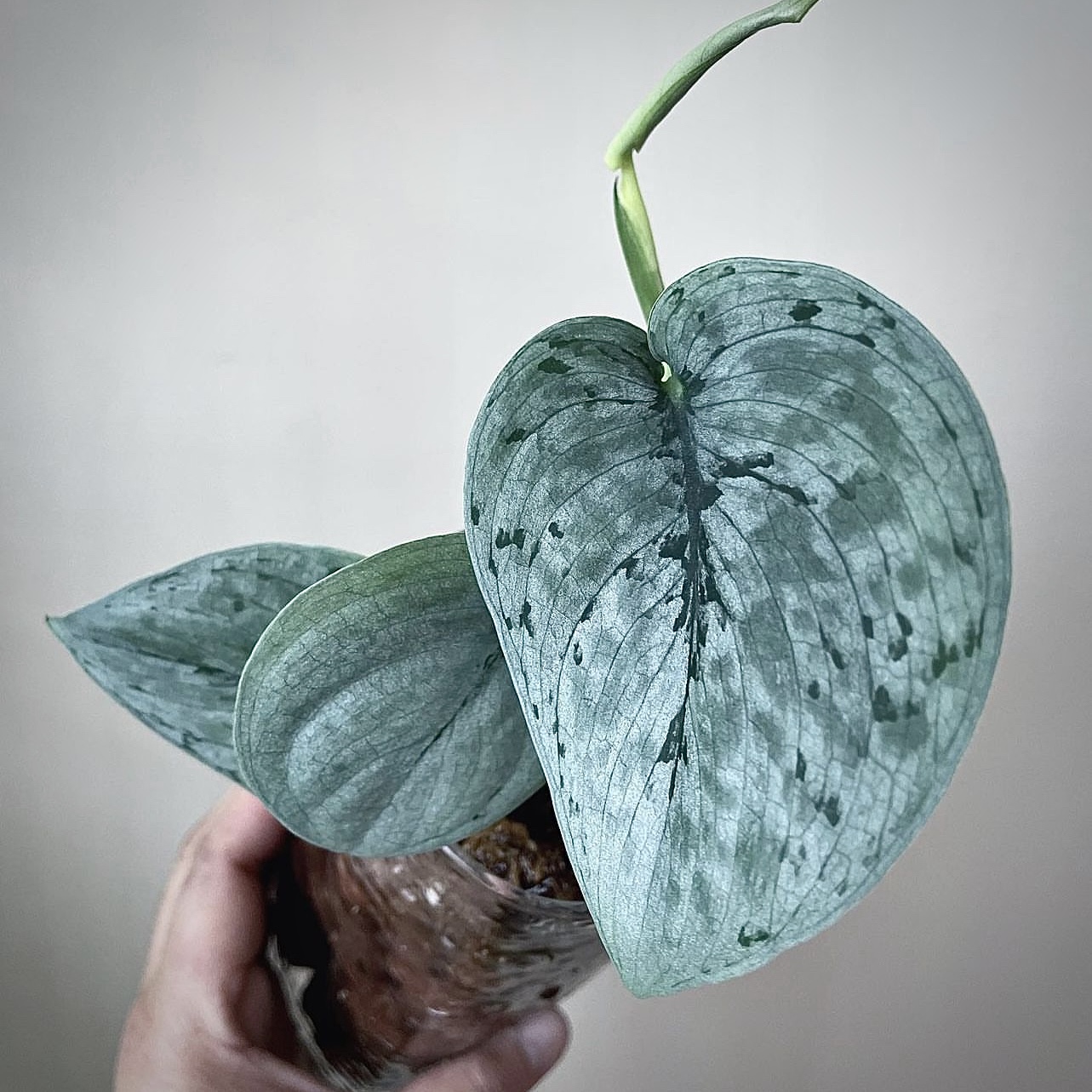
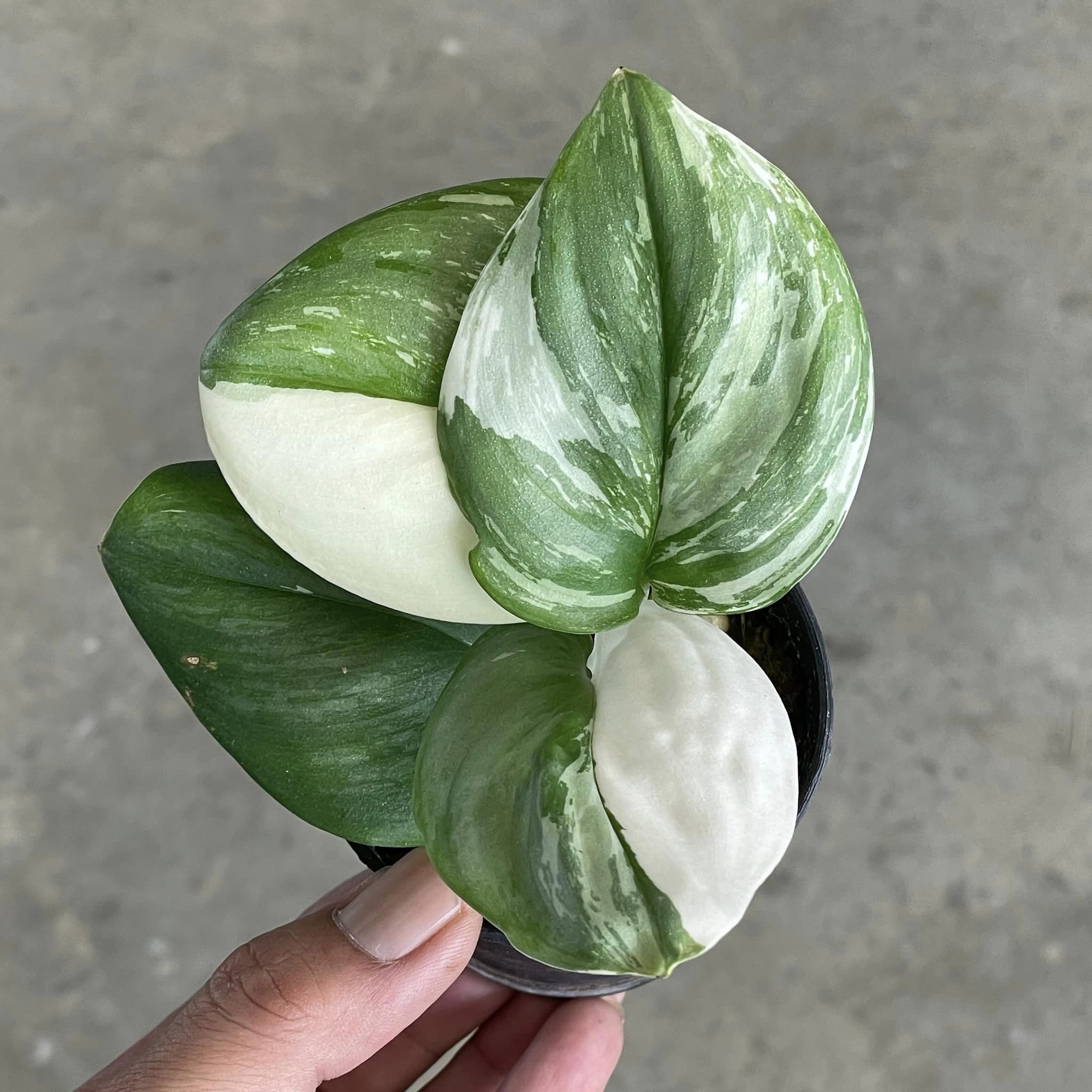
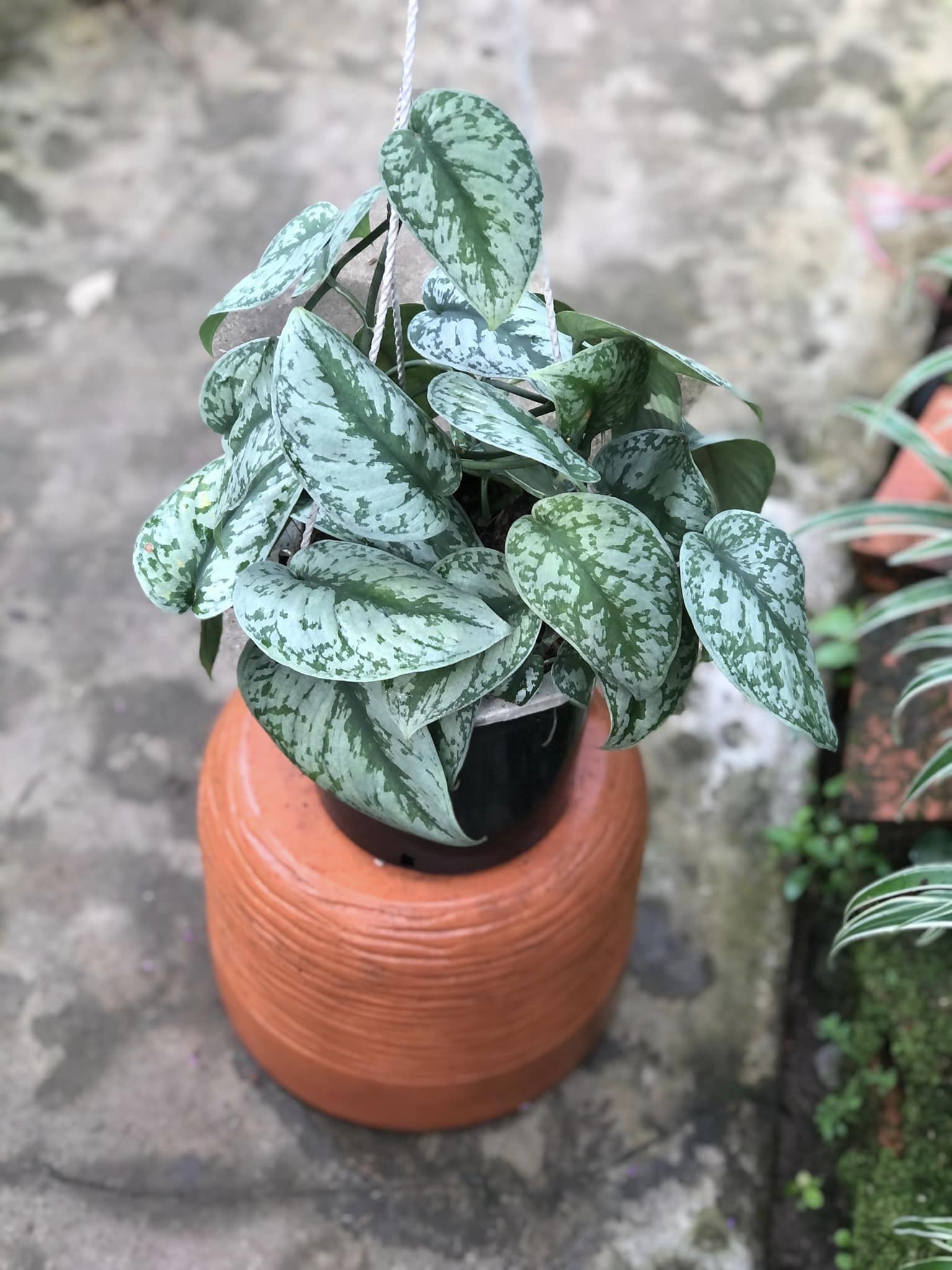
These Greenboog nursery images are more useful than a generic rarity montage because they preserve pot, leaf and pattern evidence. Their captions retain the commercial labels; they do not certify formal taxonomy or current stock.

The buyer evidence stack
- Full label: save the genus, species or `sp.` marker, selection name and seller spelling.
- Current image scope: exact plant, representative lot, parent plant or mature reference.
- Viable structure: stem, node, growth point and roots—not a leaf-only photograph.
- Sequential expression: several leaves and the stem reveal more than one dramatic sector.
- Sale format: established pot, rooted cutting, node, bare-root import or tissue culture.
- Source line: nursery/producer and propagation history where available.
- Arrival evidence: unopened package, label, roots and damage before trimming or repotting.
- Current legal check: accepted scientific name, destination authority and documents when crossing borders.
What makes availability change
A plant can be hard to find because few mother plants exist in production, propagation is slow, a pattern is inconsistent, one region has import friction, or demand rose faster than supply. Availability can improve when established stock plants produce more material or laboratories multiply a line. It can also tighten when a batch fails quality control.
Those market dynamics are real and temporary. Record the date and region whenever you call a plant scarce. Avoid absolute claims such as “rarest Scindapsus in the world” unless a defined evidence source and scope support them.
Use the correct cluster owner next
To compare recognizable species and selections, use the Scindapsus types and identity guide. For light, watering, substrate, support and symptom triage, use the general Scindapsus care guide. For current names, photos, formats, price and stock, browse the live Scindapsus collection.
If the sales question centers on green, silver, white or yellow expression, the variegation evidence guide provides neutral language for phenotype, damage and suspected off-types.
Sources and evidence boundaries
- Kew Plants of the World Online: genus Scindapsus — accepted genus, species list and range.
- IUCN Red List: assessment supporting information — evidence behind conservation categories.
- CITES Checklist of Species — official taxon-specific trade-protection check.
Evidence limit: this guide does not assign a conservation category, legal requirement or accepted species to an informal trade label. Verify the exact taxon, jurisdiction, current assessment and shipment before making those claims.