Cultivated-hybrid identity, shallow lobes and crown-led care
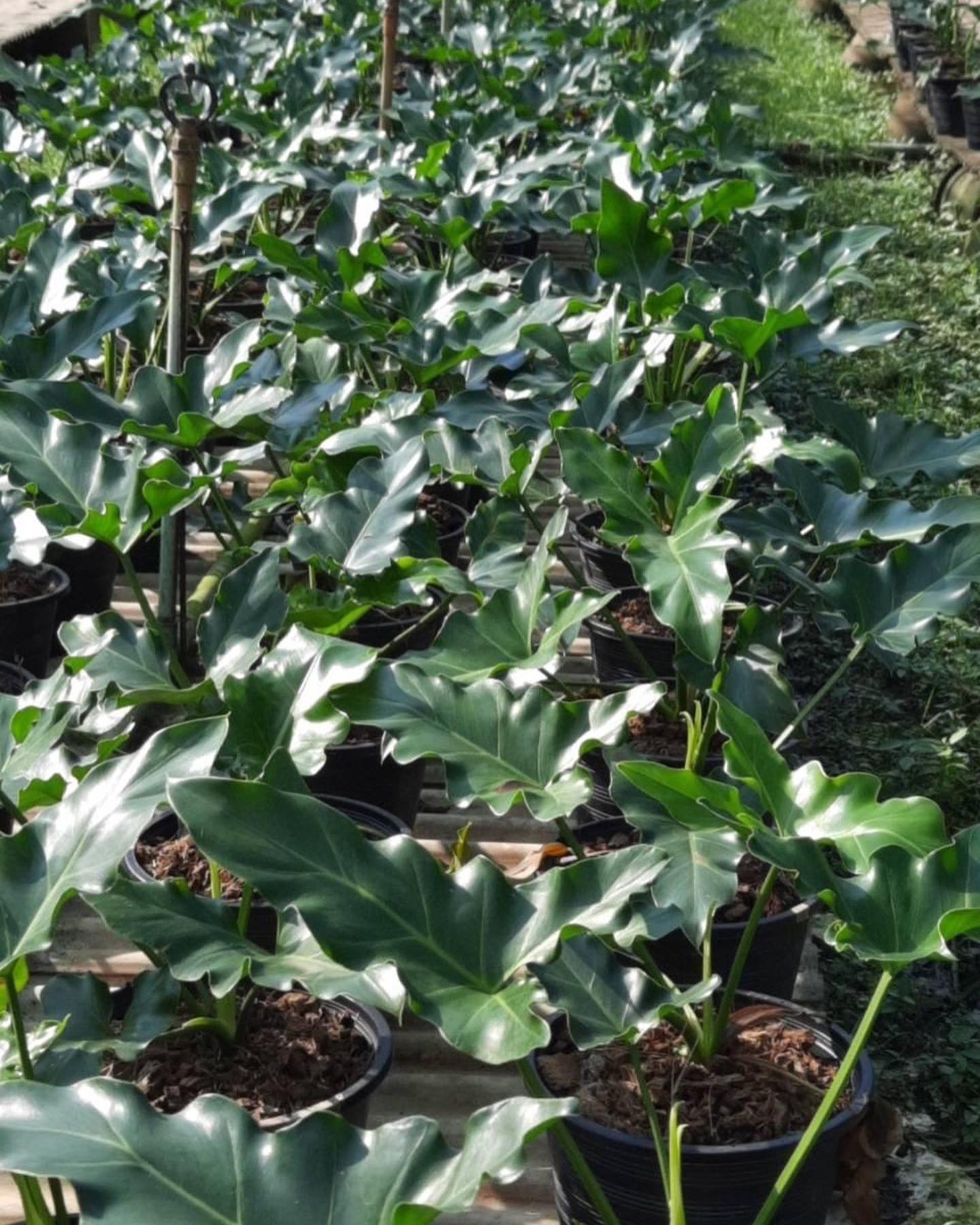
Evansii is a cultivated hybrid, not a wild Brazilian species. Horticultural references record it as Philodendron × evansii or Philodendron ‘Evansii’, a large self-heading plant with broad, shallowly lobed leaves—not a velvet, heart-shaped trailing vine.

A named horticultural hybrid, not a wild species
University of Connecticut Extension describes Philodendron × evansii as a hybrid between P. speciosum and P. bipinnatifidum. The recorded parentage is Philodendron bipinnatifidum × Philodendron speciosum. The Aroid Cultivar Registry uses the cultivar form Philodendron ‘Evansii’ for plants matching this established cross.
Historical nursery material traces its commercial introduction to Evans & Reeves in 1952. That makes Evansii a cultivated lineage with no wild native range of its own. The parent species have South American ranges, but “native to Brazilian rainforest” should not be assigned to the hybrid.
Read the crown and leaf outline together
| Feature | Supported Evansii evidence | Remove or qualify |
|---|---|---|
| Growth axis | Self-heading to trunk-forming crown. | Trailing vine with no true stem. |
| Leaf | Broad, glossy and shallowly lobed. | Velvety heart-shaped foliage. |
| Parentage | P. bipinnatifidum × P. speciosum. | Wild Brazilian species. |
| Support | Stable pot and room for the crown. | Routine moss-pole training. |
Young leaves can be less divided, while established growth can show stronger undulation and shallow lobing. Compare several leaves, petioles and the crown; do not confuse normal development with reversion.
The parent comparison helps, but it is not a home DNA test. P. bipinnatifidum is associated with more deeply divided foliage, while P. speciosum contributes a broader, less-divided outline in the horticultural account. Evansii is expected to sit between them. Provenance and consistent clonal morphology still matter more than forcing one leaf to match a diagram.
Plan for a broad self-heading plant
A moss pole is not the main structural answer for this self-heading, trunk-forming hybrid. Use a stable container with enough footprint to resist tipping, leave the crown above the medium and give petioles room to spread. Rotate only when needed for balanced light; frequent handling can damage large leaves.
Repot when roots, substrate breakdown or instability justify it—not every two or three years automatically. Move up modestly, keep the crown at its previous depth and postpone feeding while disturbed roots resume function. Use the general Philodendron guide for broader indoor care.
Acclimate a newly delivered plant before demanding faster growth. Hold warmth, filtered light and root moisture reasonably steady, inspect the crown and delay nonessential pruning. Existing transit damage will not reverse; recovery is shown by firm tissue, stable roots and a clean new leaf emerging from the centre.
Water from root and crown evidence
Check pot weight and moisture below the surface. Water through the rooted volume when it has partly dried, let excess drain and avoid water collecting around a buried crown. A limp plant in a heavy wet pot needs root inspection; a dry lightweight root ball needs an even rewet.
Brown tips can follow moisture swings, salts, hot glass, root damage or spray injury. A fixed 40–60% humidity target and pebble tray cannot identify the cause. Use the watering guide for deeper root-zone decisions.
Increase usable light gradually rather than choosing a window direction by name. Watch leaf temperature and the pattern of exposure through glass. A broad crown may shade its own lower leaves, so natural ageing at the base should be separated from fast, multi-leaf yellowing linked to roots or a sudden environmental change.
Diagnose before treating
| Signal | Check first | Measured response |
|---|---|---|
| Several leaves yellow | Root firmness, wet duration, light and natural age. | Correct the verified cause. |
| Crown softens | Crown depth, trapped water and failed roots. | Keep viable tissue dry at the crown; remove rot. |
| Tan exposed patch | Recent light move, heat or spray residue. | Reduce the matched exposure and acclimate. |
| Fine stippling or webbing | Leaf undersides for mites. | Isolate and identify before a labelled treatment. |
| Sticky residue or raised bumps | Petiole bases and undersides for scale/mealybugs. | Target the confirmed pest; avoid routine neem. |
Propagation and buyer evidence
Evansii is maintained as a cultivated clone or hybrid line. Home propagation is not the same as taking a node from a climbing vine. Use a viable basal offset or professionally propagated plant where available; a detached leaf cannot reproduce the crown. Record the source label and photograph the parent plant before division.
- Confirm cultivar/seller-line label and parent-plant evidence.
- Ask whether the images are exact or representative.
- Verify rootedness, selected format and crown condition.
- Plan enough floor space and a stable container.
- Ignore unsupported air-purifying or pest-proof promises.
Safety and sources
Treat Evansii like other Philodendron for calcium-oxalate safety: keep foliage, sap and cut material away from children and pets, and seek appropriate medical or veterinary guidance after significant exposure.
- University of Connecticut Extension: Philodendron × evansii parentage and morphology
- Aroid Cultivar Registry: hybrid cultivar naming
- Historical synthesis: Evans & Reeves 1952 introduction
- Kew POWO: Philodendron bipinnatifidum
- Kew POWO: Philodendron speciosum
- UC IPM: symptom diagnosis and houseplant pests