
Greenboog food-data guide
A practical reading guide to USDA nutrient records for identified, cooked taro. It is not a diagnosis, a meal plan or proof that an ornamental “elephant ear” is edible.
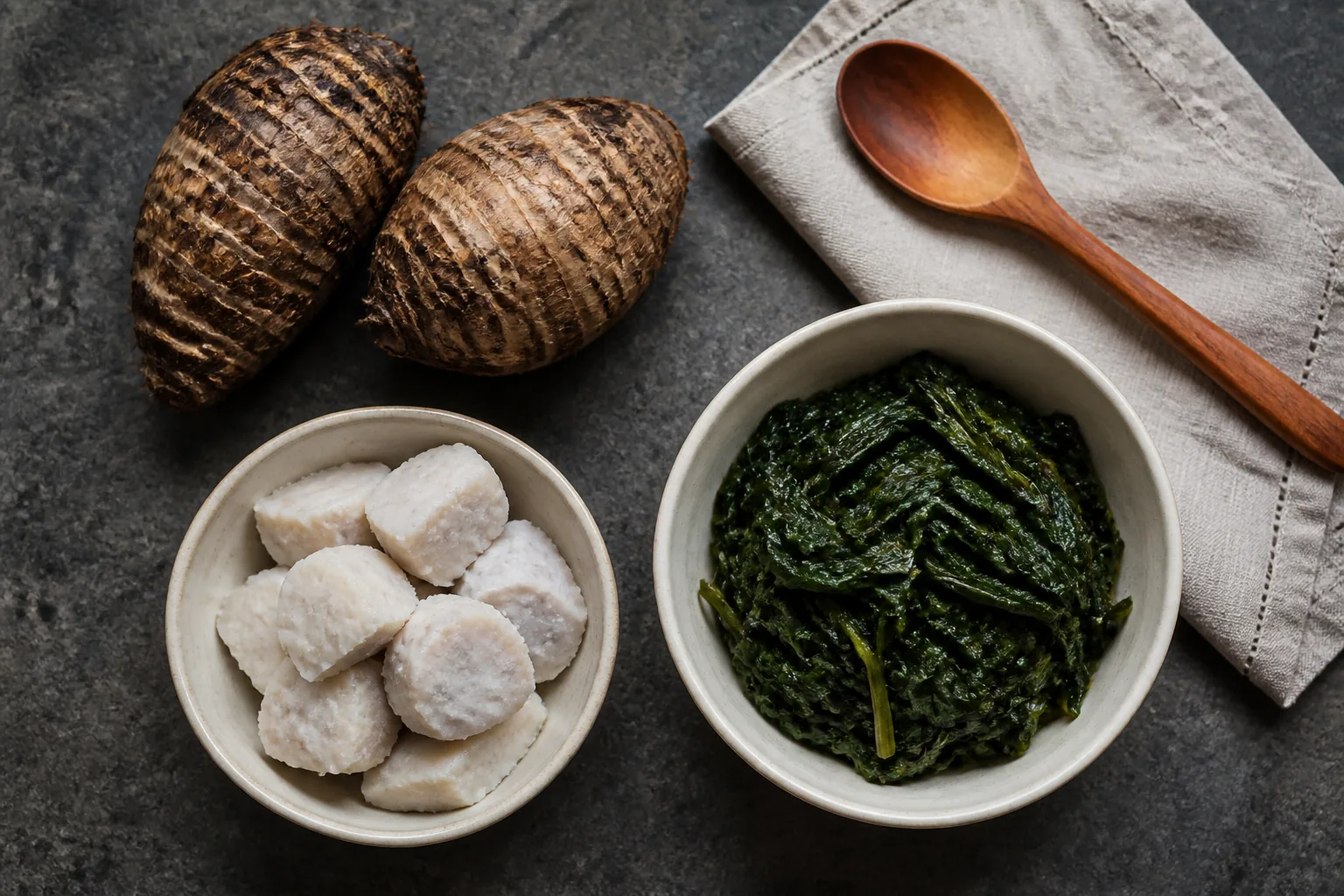
Cooked taro corm versus steamed taro leaves
USDA FoodData Central keeps separate SR Legacy records for taro, cooked, without salt (FDC 168486) and taro leaves, cooked, steamed, without salt (FDC 168488). The figures below compare 100 g of the stated cooked edible portion, not a recipe, product label or serving size.
| Nutrient | Cooked corm | Steamed leaves |
|---|---|---|
| Energy | 142 kcal | 24 kcal |
| Carbohydrate | 34.6 g | 4.02 g |
| Dietary fiber | 5.1 g | 2.0 g |
| Protein | 0.52 g | 2.72 g |
| Potassium | 484 mg | 460 mg |
| Vitamin C | 5.0 mg | 35.5 mg |
Food composition data describe the selected food record. Cultivar, maturity, cooking water, draining and added ingredients can change what is on a plate; a missing entry is not proof that a nutrient is zero.
Do not eat raw taro tissue or an unidentified ornamental plant. Correct botanical identity, food-use provenance and an established cooking method come before any nutrition comparison. See the taro culinary guide for preparation context and the Colocasia identification guide for the genus boundary.
What a cup estimate can—and cannot—tell you
The USDA corm record gives 132 g for one sliced cup. At that record’s stated values, 132 g works out to approximately 187 kcal, 45.7 g carbohydrate, 6.7 g fiber and 639 mg potassium before oil, coconut milk, sugar, salt, sauce or other ingredients are added. A household cup can weigh differently with cut size and packing, so grams are the better unit when precision matters.
This is a calculation from a database reference amount, not a prescription. The FDA Daily Value reference is useful for comparing Nutrition Facts labels, but it does not replace individual nutrition advice.
Read the result in the context of the dish
- Corm: the unsalted cooked-corm record is primarily a starchy-carbohydrate food and contains little protein.
- Leaves: the steamed-leaf record is lower in energy and carbohydrate per 100 g, but it is a different ingredient with a different preparation context.
- Recipes change the result: frying adds fat; coconut products, sugar and syrups change energy and carbohydrate; stock, sauces and salt can raise sodium.
- Use the right evidence: a packaged food needs its own Nutrition Facts label, and a home recipe needs its actual ingredients and serving yield.
Taro, carbohydrate and potassium: keep the boundary clear
USDA nutrient records do not measure glycemic index or determine whether a food is suitable for a specific medical condition. The National Institute of Diabetes and Digestive and Kidney Diseases notes that carbohydrate foods can raise blood glucose and that meal planning can use carbohydrate counting or the plate method. Anyone using insulin, glucose-lowering medicine or a clinician-set carbohydrate target should follow their care plan.
The corm and leaf records each list roughly 460–484 mg potassium per 100 g. The NIH Office of Dietary Supplements explains that impaired potassium excretion and some medicines can raise hyperkalemia risk. If you have kidney disease, heart failure, a prescribed potassium limit or potassium-altering medicines, use your clinician’s or renal dietitian’s advice for servings and preparation.
Choose the right Greenboog guide
| Question | Guide |
|---|---|
| How do I identify the plant? | Colocasia identification overview |
| How is correctly identified taro prepared? | Culinary uses of taro |
| How do I grow ornamental Colocasia? | How to grow Colocasia |
| Which species and trade labels am I comparing? | Colocasia varieties guide |
FAQ
How many calories are in cooked taro?
USDA FoodData Central lists 142 kcal per 100 g for taro cooked without salt. Its 132 g sliced-cup reference calculates to about 187 kcal before any recipe ingredients are added.
Is taro high in protein?
The cooked-corm record lists 0.52 g protein per 100 g. The steamed-leaf record lists 2.72 g per 100 g, but it is a different food and neither figure determines the protein content of a complete meal.
Is taro low glycemic?
This guide does not assign a universal glycemic index. USDA composition values do not measure it, and preparation, portion and the rest of a meal matter.
Can I use these figures for taro chips, desserts or curry?
No. Those foods can contain added oil, coconut products, sugar, salt or sauces. Use the specific product label or calculate the complete recipe.
Sources used: USDA FoodData Central records 168486 and 168488 for the named cooked foods; FDA Daily Value guidance; NIDDK healthy-living-with-diabetes guidance; NIH Office of Dietary Supplements potassium fact sheet. Accessed 2026-08-27.
