
Greenboog food-preparation guide
A source-bound orientation to cooking identified taro. It does not provide medical advice, a universal recipe, or permission to eat an ornamental or look-alike aroid.
Confirm what you have before cooking
“Taro” can refer to different crops in different places, while “elephant ear” can refer to multiple aroid genera. The University of Hawaiʻi Pacific Food Guide distinguishes Pacific taro types and gives preparation notes for the food context it describes. A store label, a botanical identification and documented edible provenance are stronger evidence than leaf shape or a common name.
Never treat ornamental nursery stock as food stock. Cultivar identity, pesticide history and intended use may be unknown. Raw plant tissue and unidentified aroids can cause serious irritation; cooking is not a way to validate an unknown plant.
What the University of Hawaiʻi guide actually says
| Plant part | Source-led preparation boundary |
|---|---|
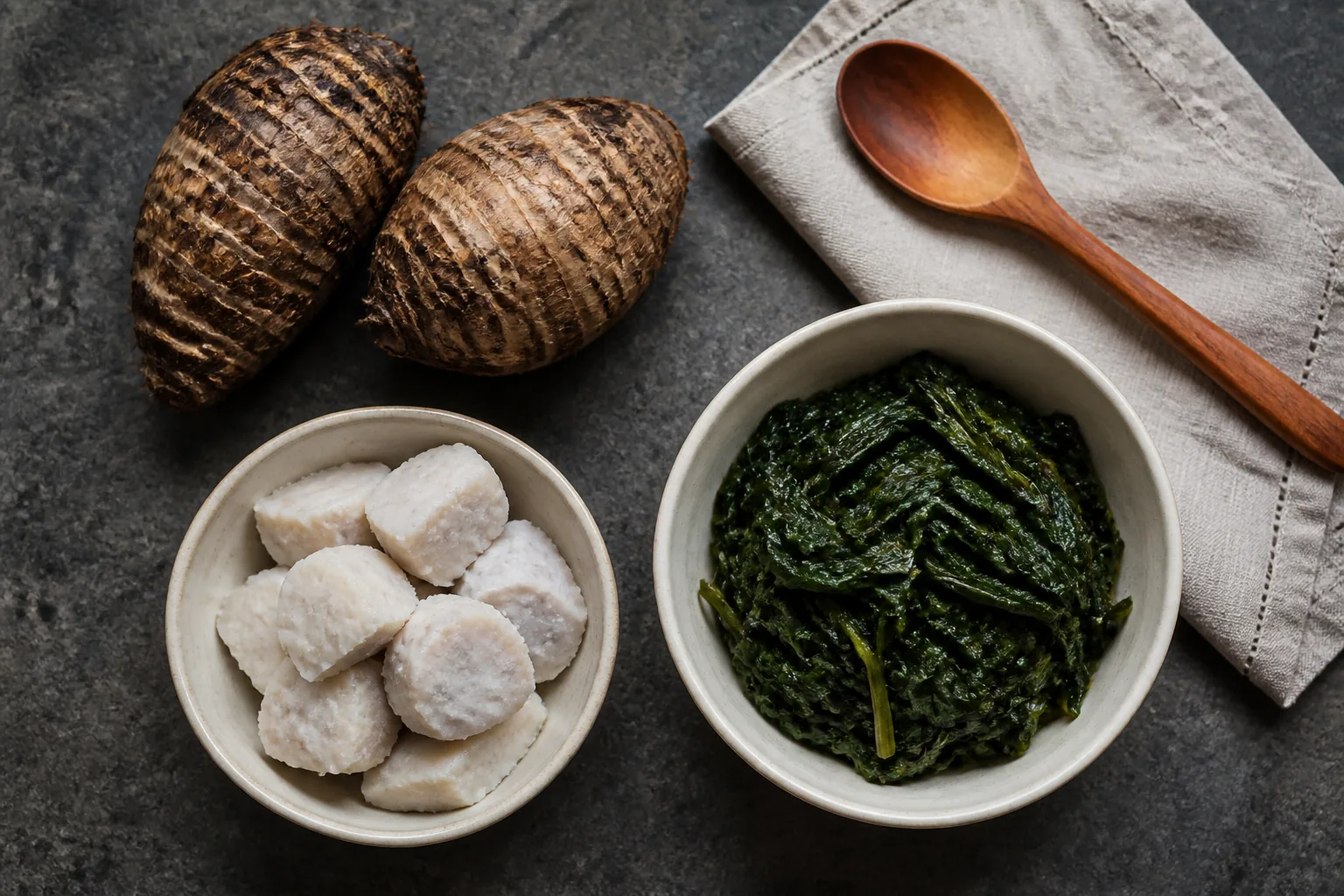
| Corm | Wash; do not eat raw. The guide lists roasting, baking and boiling as cooking options and advises careful peeling to avoid throat and mouth itchiness. |
| Leaves | Choose young leaves as described by the guide; do not eat raw. Boil in water, drain, then cook again in water or coconut cream to help prevent mouth itchiness. |
| Older leaves | The guide notes they may retain an acrid taste even after cooking. Do not turn that warning into a claim that every leaf is interchangeable. |
Build a dish from a verified recipe
Taro can appear in many regional dishes and foodways. A safe, respectful approach is to choose a recipe from a credible source for the named dish and follow its ingredient, plant-part and cooking instructions. Do not replace a recipe’s plant part or method with an unverified online shortcut.
For nutrition, use the cooked-taro nutrition guide, which separates USDA records for cooked corm and steamed leaves. A nutrient record for plain cooked corm does not describe chips, sweetened paste, curry, coconut-rich dishes or any other finished recipe.
Keep food, plant care and culture distinct
Use the Colocasia identification guide for botanical boundaries and the cultural-context guide for source-specific context. Neither replaces a food recipe, and a recipe does not establish commercial availability or origin.
FAQ
Can you eat taro raw?
No. The University of Hawaiʻi CTAHR guide says not to eat taro corms or leaves raw.
Can I cook leaves from an ornamental plant?
Do not assume so. Use documented food material with a known identity and food-use provenance; ornamental growing history can be unsuitable for eating.
Do all taro dishes have the same nutrition?
No. Ingredient list, cooking method and serving size change the result. Use the specific product label or recipe.
Sources used: University of Hawaiʻi CTAHR Pacific Food Guide and Hawaiʻi Nutrition Center taro guidance; USDA-linked Greenboog cooked-food data guide. Accessed 2026-08-27.

1 thought on “Culinary Uses of Taro: Preparation and Food-Safety Boundaries”