
Monstera identification guide
“Swiss cheese plant” is a shared common name, while Monstera is a botanical genus. In shops and homes, the nickname most often points to Monstera deliciosa or Monstera adansonii—two accepted species with different scale, leaf architecture and buying expectations.
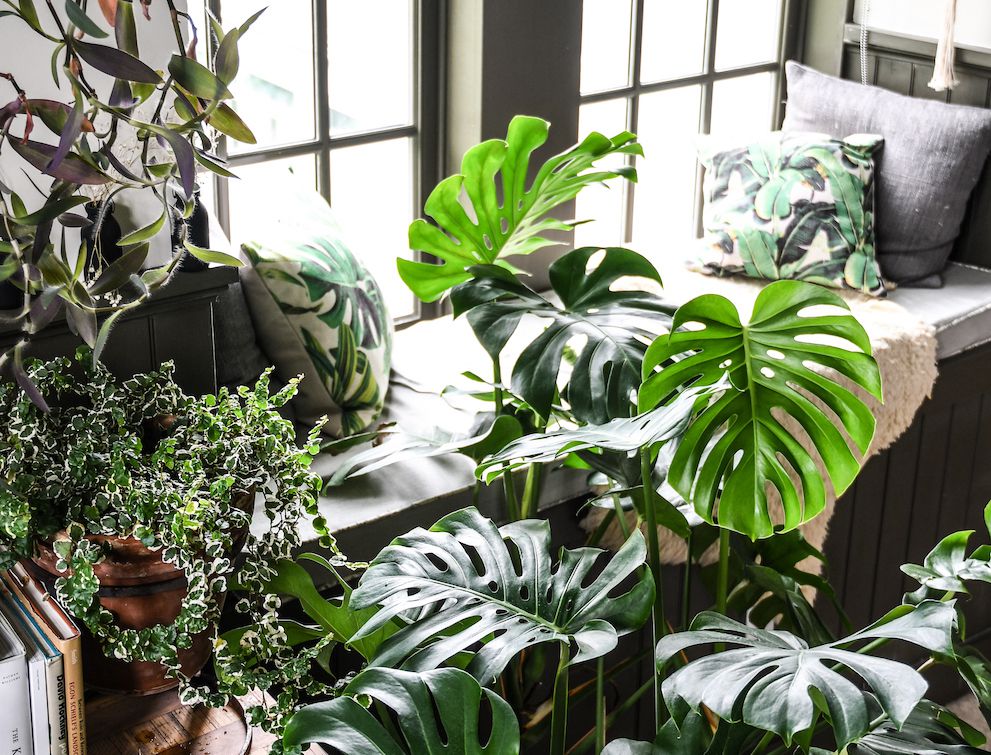
Translate the label before comparing plants
| Label | What it means | What still needs checking |
|---|---|---|
| Monstera | A genus in the aroid family, not one single houseplant. | Species, cultivar/trade label, growth stage and photographed lot. |
| Swiss cheese plant | A nickname inspired by fenestrated leaves and used for more than one Monstera. | Whether the seller means M. deliciosa, M. adansonii or another plant. |
| M. deliciosa | An accepted species commonly sold as a large climbing Monstera. | Juvenile versus mature foliage, form, variegation claim and actual size. |
| M. adansonii | A separate accepted climbing species, also called Swiss cheese plant or vine. | Subspecies/market label, leaf sequence, node, roots and support habit. |
Monstera deliciosa versus M. adansonii
Both species climb and can change appearance as a shoot matures. Compare a sequence of hardened leaves, the whole vine and the seller’s source record—not one cropped “perfect” leaf.
| Evidence | M. deliciosa | M. adansonii |
|---|---|---|
| Mature blade pattern | Typically broader and heavier; mature blades may show deep cuts from the margin plus enclosed fenestrations. | Typically narrower/lighter with multiple enclosed openings retained within the blade margin. |
| Indoor scale | Usually the larger architectural plant and needs more floor, support and turning space. | Usually the more slender vine, easier to trail or train in a narrower footprint. |
| Juvenile foliage | Young leaves may be entire, so missing splits do not automatically disprove identity. | Young leaves may also have fewer/smaller openings than later leaves. |
| Purchase risk | A small juvenile plant cannot promise a specific mature fenestration or room-sized outcome on a schedule. | A close crop can hide vine thickness, node spacing and whether the label follows the photographed plant. |
Leaf size alone is weak evidence. Growth stage, light history, support and individual variation all change the look. Use repeated architecture and traceable labels together.
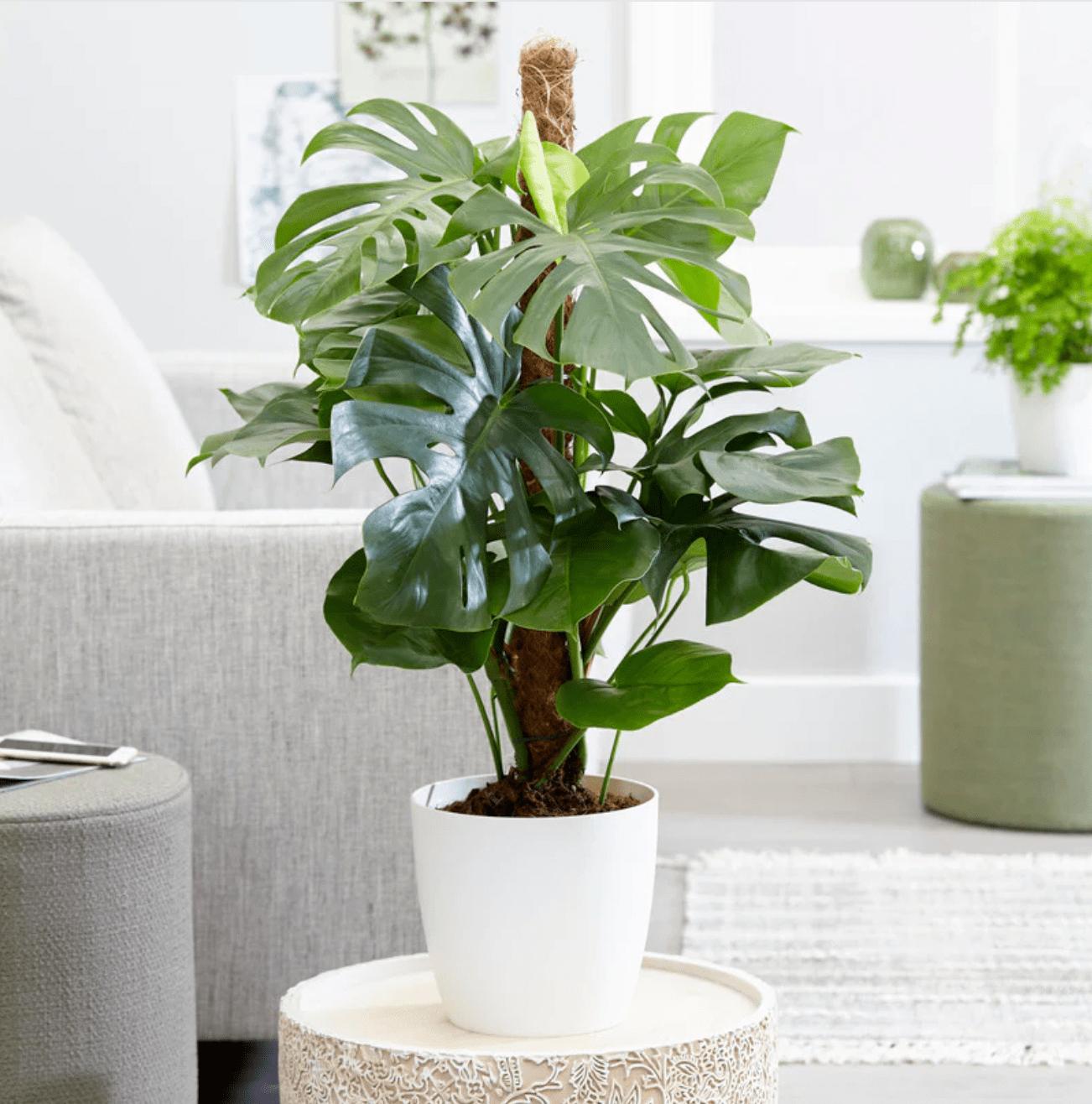
Use a five-point identity check
- Name: request the scientific name plus any cultivar or trade label exactly as the seller received it.
- Sequence: compare several hardened leaves rather than the newest soft leaf alone.
- Structure: inspect stem, node spacing, petioles, aerial roots and climbing habit.
- Scope: confirm whether photographs show the exact plant, a representative lot or a mother plant.
- Condition: separate genetic color/shape claims from scars, pests, transit damage or unfurling injury.
Three names that create extra confusion
Split-leaf philodendron is another loose common name. A Monstera is not botanically a Philodendron, even though both belong to Araceae. Mini Monstera commonly refers to Rhaphidophora tetrasperma, a different genus. Obliqua should not be used as a prestige upgrade for every thin, heavily perforated adansonii-like plant; Kew accepts Monstera obliqua separately.
For collector discovery beyond these two common houseplants, use the rare Monstera species guide. For color and trade-label comparisons within variegated plants, use the variegated Monstera field guide.
Care overlap without turning identity into a schedule
Both plants need a root zone that holds useful moisture while still exchanging air, and both benefit from a stable climbing support. Light, pot material, root mass, temperature and growth rate change how quickly each container dries. That is why the name on the tag cannot produce a universal weekly watering rule.
Use the Monstera care dashboard for light, root-zone checks, support, feeding and symptom routing. Keep this page for the naming decision: identify first, then adjust care from the plant and container in front of you.
Choose the next page by intent
Sources and evidence boundaries
- Kew Plants of the World Online: Monstera deliciosa — accepted species and classification.
- Kew Plants of the World Online: Monstera adansonii — accepted species, climbing habit and distribution.
- NC State Extension: Monstera adansonii — common-name overlap, climbing form and identification context.
- NC State Extension: Monstera deliciosa — species profile and houseplant context.
Evidence limit: common names, photographs and visible leaf traits do not prove genotype, commercial lineage or future fenestration. Seller records and the photographed plant remain part of the identification evidence.

1 thought on “Swiss Cheese Plant vs Monstera: What the Name Means”