Homalomena collector guide
Pink Diamond is a commercial name for a striking salmon-pink, cream and green Homalomena. The pattern is easy to recognize in a photograph; the species is not. A careful buyer separates trade name, tentative botanical label, exact lot and current condition before deciding how to care for it.
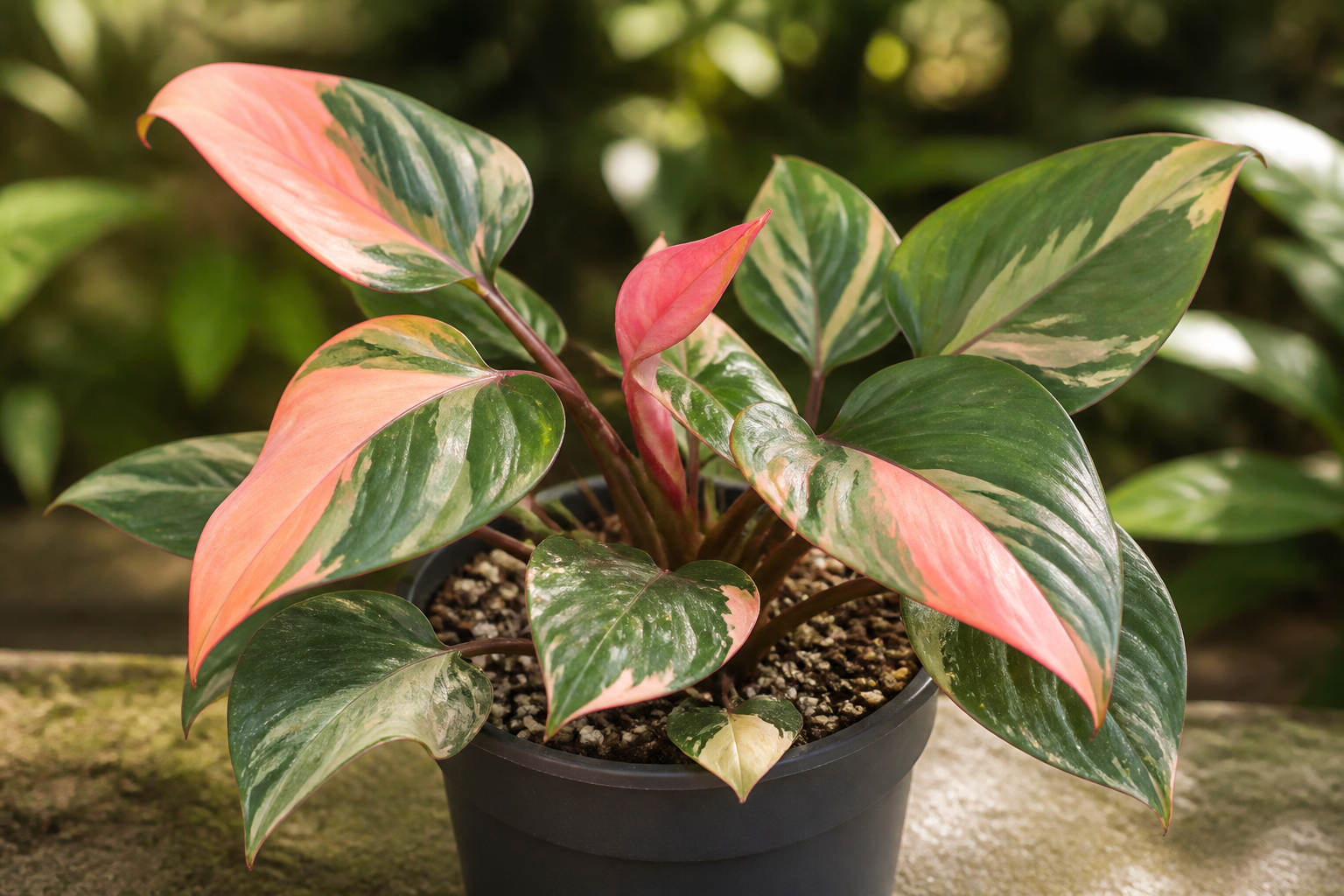
- Trade name tells you which horticultural selection the seller intends: Pink Diamond.
- Tentative botanical label records the current comparison, not certainty. In taxonomy, cf. means “compare with.”
- Lot or exact-plant photo documents the material being offered now.
- Voucher and production history provide the repeatable evidence needed for a stronger species or lineage claim.
Why “cf. aromatica” should not be shortened silently
Kew accepts Homalomena aromatica as a wet-tropical species native from Arunachal Pradesh into South China and Indo-China. That makes the name botanically real. It does not make every Pink Diamond in trade a confirmed member of that species.
The qualifier cf. preserves uncertainty: the plant is being compared with H. aromatica. Meanwhile, H. rubescens is another species name used in the current commercial description. NParks describes that species as a terrestrial herb with heart-shaped leaves on red petioles, but those visible similarities are not enough to settle the identity of a variegated selection from a photo.
| Label or record | What it supports | What it cannot prove alone |
|---|---|---|
| Pink Diamond | A commercial selection recognized by its photographed pink/cream/green foliage. | Accepted species, breeder, lineage or genetic mechanism. |
| H. cf. aromatica | A tentative comparison with the accepted species H. aromatica. | Confirmed identification; cf. should not be dropped. |
| H. rubescens | An alternative commercial label and a species comparison with red-petioled plants. | That this exact Pink Diamond lot belongs to that species. |
| Exact/lot photograph | Current phenotype, size, leaf count and visible condition. | Future variegation or taxonomic identity. |
Read the photographed pattern without promising the next leaf
The authentic Greenboog images show salmon-to-pink sectors, muted cream areas, dark green tissue and reddish petioles. Some leaves are mostly green; others carry broad pale areas. The nursery-lot image also shows meaningful plant-to-plant variation.
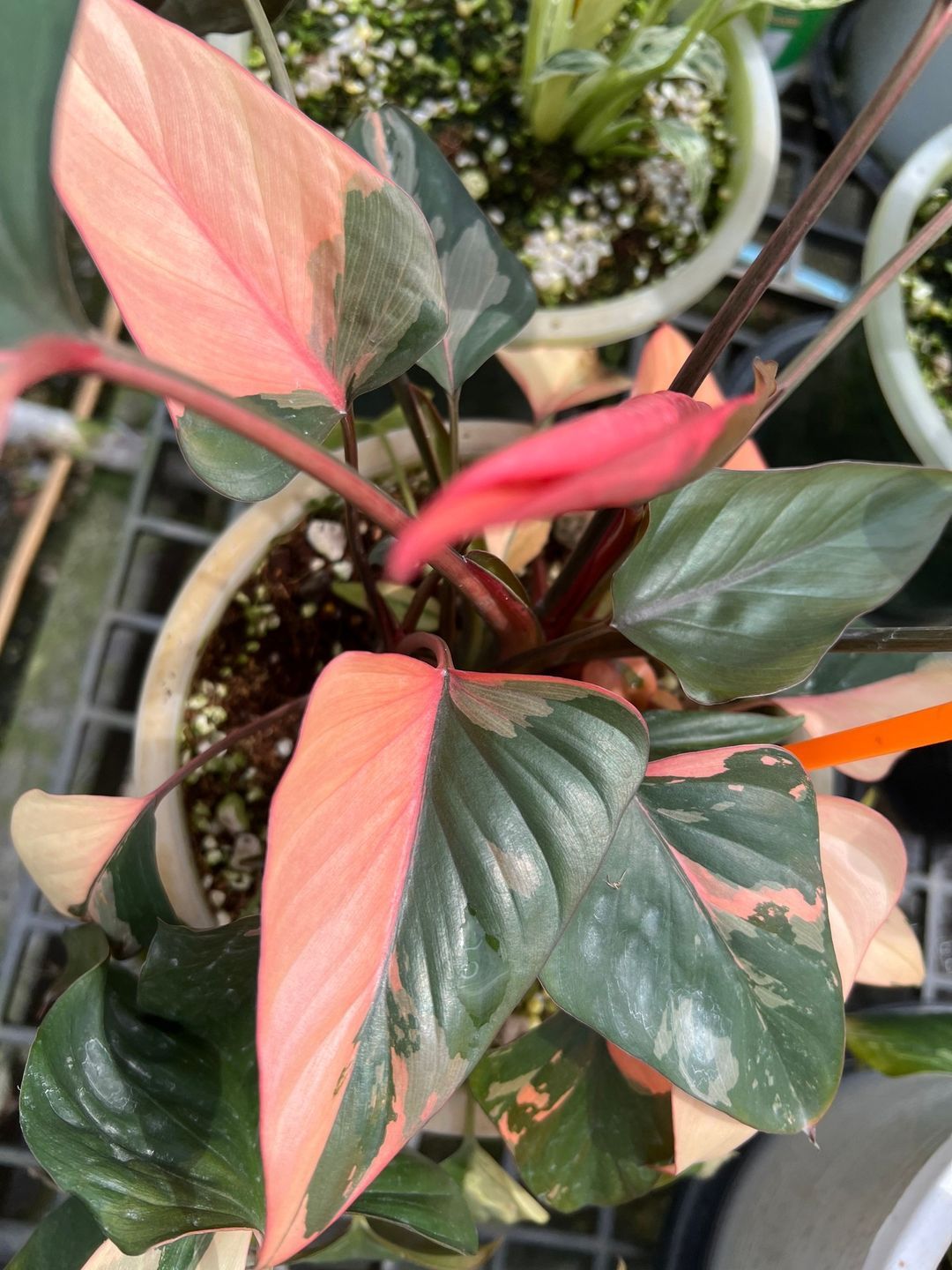
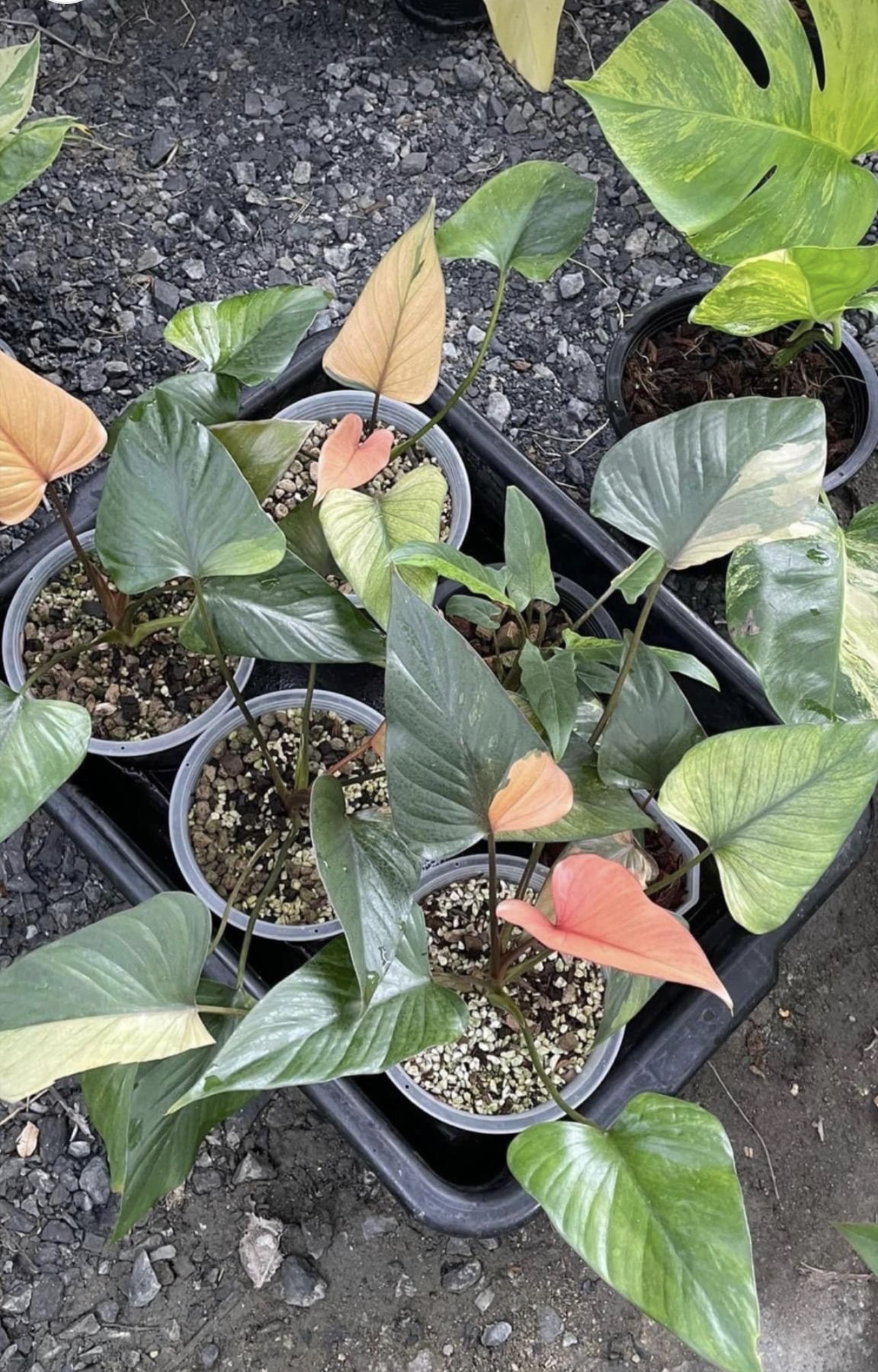
Use neutral record language: “pink-dominant new leaf,” “green-dominant run,” “cream sector,” “transit bruise” or “expanding lesion.” The variegation evidence guide explains why phenotype, damage and an off-type claim require different evidence.
Buyer checklist before care begins
- Ask what the photo represents: exact plant, representative lot or mature reference.
- Preserve the full label: record Pink Diamond and any cf. qualifier exactly as supplied.
- Confirm format: pot size, established plant versus division, leaf count and root status.
- Inspect functioning green tissue: a dramatic pale leaf does not compensate for weak roots or a damaged crown.
- Document the package unopened: photograph label, pot, substrate, leaves and visible damage before trimming.
- Use the live listing: current size options, price, stock and sales images override this evergreen article.
Review the live Pink Diamond product page for the exact commercial label and current options. Compare neighboring selections in the Homalomena collection without treating similar red petioles or pink color as proof that two names are the same plant.
A conservative care profile for an established Pink Diamond
Light: protect pale tissue from abrupt exposure
Start with bright filtered light after transit and change intensity gradually. The potential comparison species are shade-associated terrestrial plants, and pale sectors may be less forgiving of heat or direct-sun shock. Light can affect growth and visible expression; it does not confirm or rewrite species identity.
Root zone: moist and aerated are simultaneous requirements
Use a substrate that holds usable moisture but drains freely around the roots. Water thoroughly, allow drainage and recheck moisture depth and pot weight rather than watering on a weekday. “Lots of water” in a species record does not mean stagnant media in a container.
Humidity and temperature: stability before optimization
After shipping, avoid stacking changes in light, temperature, watering and humidity on the same day. Stable humidity can slow water loss while roots recover, but a sealed, stagnant environment can extend leaf wetness. Keep airflow gentle and interpret the next leaf only after the plant is using water consistently.
Nutrition: feed active roots, not color
Begin or resume fertilizer only when an established plant shows active roots or steady new growth. Use a conservative label-compliant rate and observe substrate salts and leaf response. Pink or cream sectors are not a deficiency to correct, and fertilizer cannot repair a compromised crown or oxygen-poor root zone.
Use the symptom to choose the next inspection
| Observation | Check next | Avoid |
|---|---|---|
| Droop after delivery | Root-zone moisture, temperature history, crown firmness and transit damage. | Automatic watering before inspecting the pot. |
| Wilt while substrate is wet | Root oxygen, odor, root firmness, drainage and stem/crown base. | Fertilizing a failing root system. |
| Brown edge on a pale sector | Recent sun/heat change, dry root zone, salt buildup and leaf age. | Calling every crisp margin disease. |
| Water-soaked expanding patch | Isolation, leaf wetness, airflow and lesion progression. | Mist-and-wait treatment or labeling it variegation. |
| Several greener new leaves | Growth point, petiole/stem pattern and a dated sequence of leaves. | Cutting a recently stressed plant from one leaf. |
Choose the next Greenboog page by decision
This article owns identity uncertainty and integrated care. The product page owns the exact commercial offer; the collection owns comparison shopping; the variegation guide owns phenotype terminology.
Sources and evidence boundaries
- Kew Plants of the World Online: Homalomena aromatica.
- Kew: genus Homalomena — terrestrial habit and genus context.
- Singapore NParks: Homalomena rubescens — comparison record for red-petioled terrestrial plants and moist, well-drained root zones.
- Smithsonian NMNH: voucher specimens — repeatable identity evidence.
Evidence limit: the sources confirm accepted species and comparison traits; they do not establish that the commercial Pink Diamond selection is H. aromatica or H. rubescens. Exact identification requires traceable production and taxonomic evidence beyond foliage photographs.