
Greenboog large-Alocasia field guide
This guide separates observable cultivar identity from trade labels, then helps indoor growers and buyers plan for a broad canopy, winter slowdown and the very different needs of established versus tissue-culture plants.
Check the whole plant before applying a name or care schedule.
| Evidence | Expected cue | Do not confuse |
|---|---|---|
| Leaf face | Glossy dark gray-green with puckered texture | White-veined Frydek/Amazonica-type foliage |
| Underside / petiole | Reddish-purple underside; sturdy red, brick-red or maroon petiole | Any unrelated dark-petioled Alocasia |
| Horticultural name | A. sarawakensis ‘Yucatan Princess’, with RHS unresolved-name caveat | A. micholitziana or a Yucatán origin story |
| Sale format | Established standard plant or separately labelled variegated tissue culture | Format and variegation as interchangeable claims |
What is Alocasia Yucatan Princess?
Kew’s Plants of the World Online accepts Alocasia sarawakensis M.Hotta, first published in 1967, and gives the species’ native range as Borneo. The species origin does not mean a nursery cultivar was collected in the wild, and the name “Yucatan Princess” is not evidence of a Yucatán origin.
The Royal Horticultural Society cultivar record lists A. sarawakensis ‘Yucatan Princess’ but marks its name status as unresolved. That is the most useful horticultural placement currently available, with an evidence boundary: do not invent a parentage, breeder or collection locality from reseller descriptions.
Older nursery catalogs sometimes append Masquerade™ to Yucatan Princess. Treat that as a trade-series label, not an Alocasia masquerade species. A trade label can help match an old listing, but the plant still needs the phenotype and provenance of the batch in front of you.
How to identify a standard plant
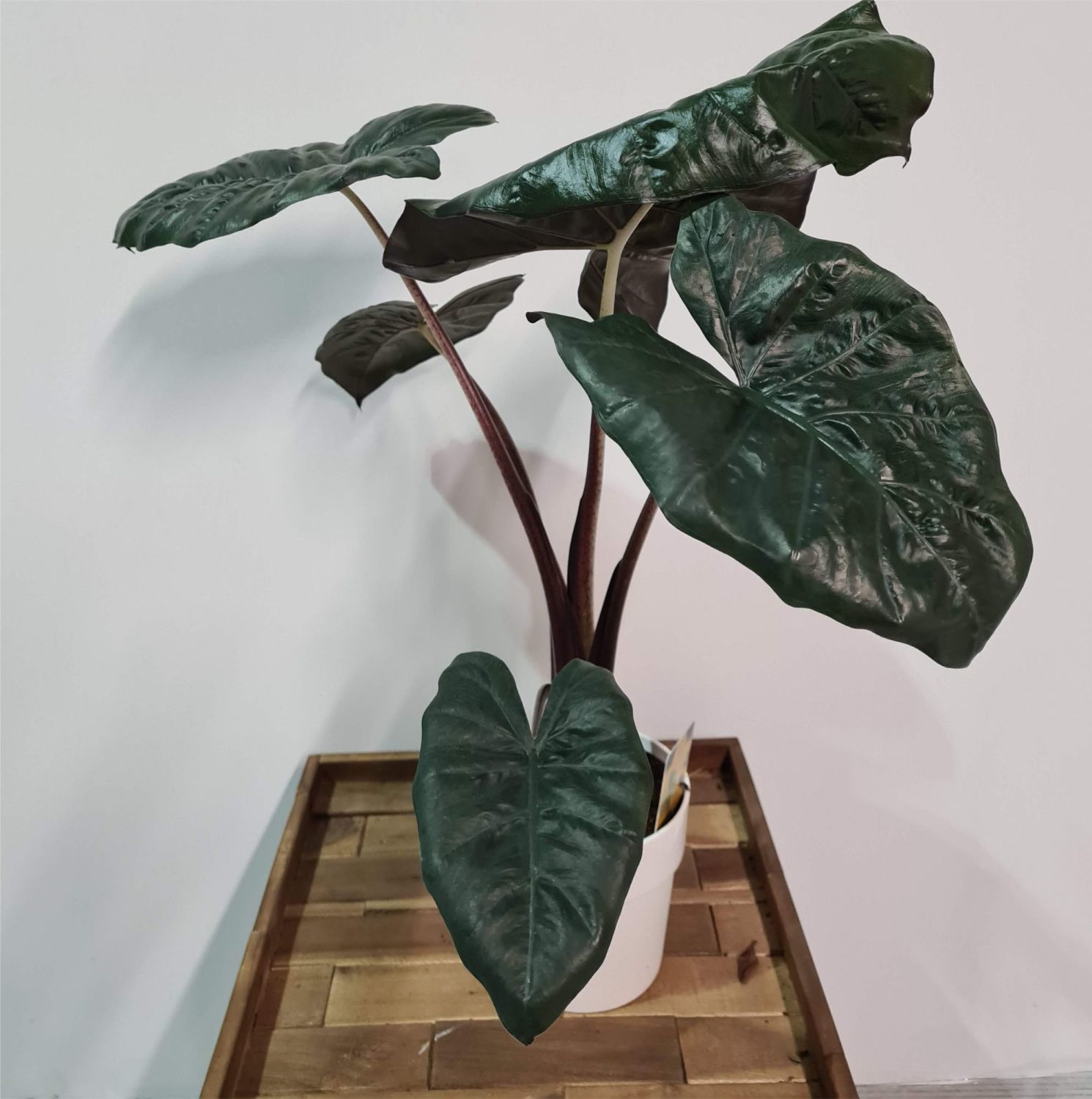
RHS describes a tender perennial with dark red stems and heart-shaped, glossy, dark gray-green leaves with reddish-purple undersides. NC State Extension adds a puckered or crinkled surface and sturdy brick-red stems. These cues match the first-party plant shown below.
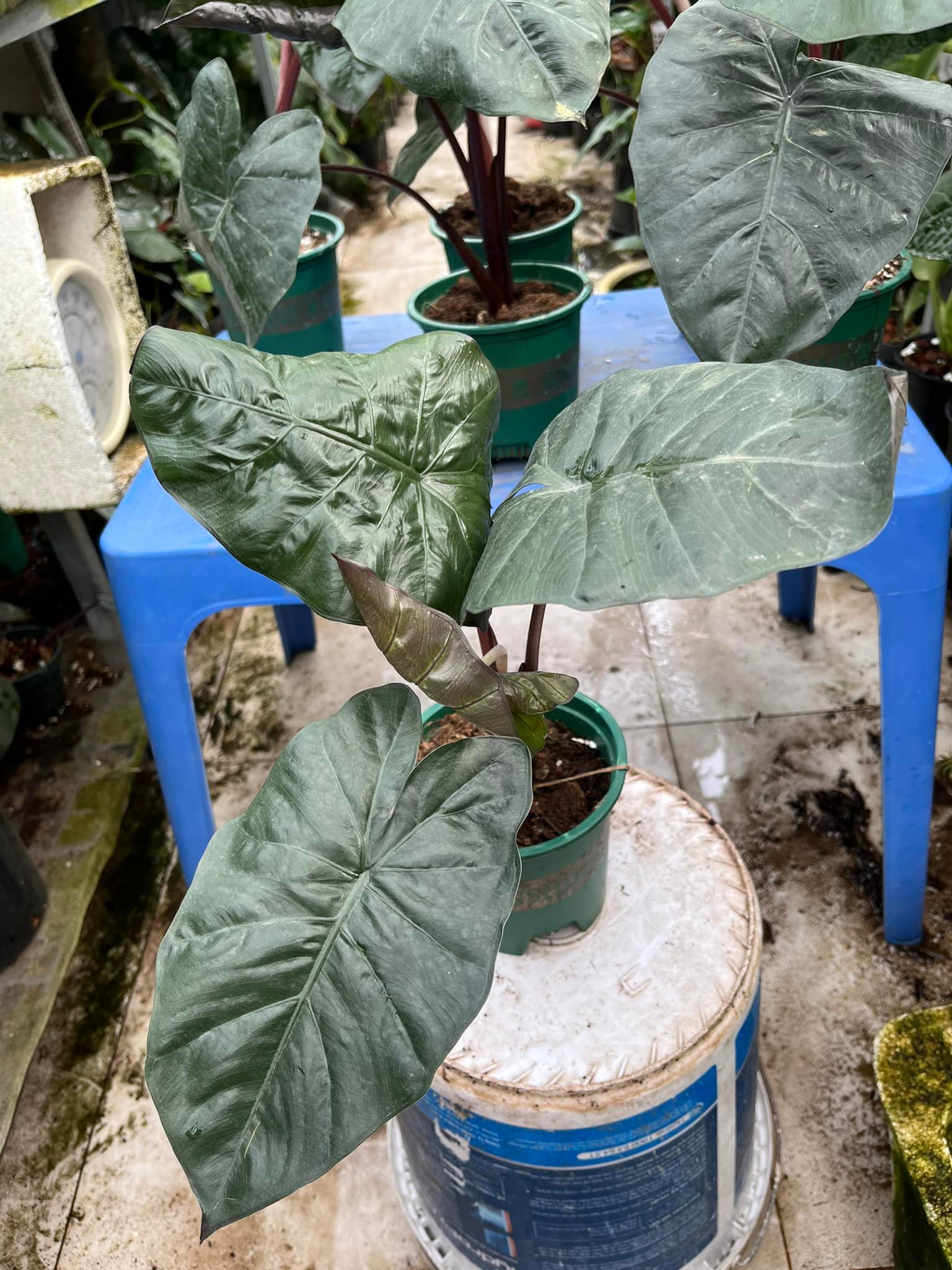
New leaves may open lighter or bronze-toned before hardening darker. A normal change across leaf age is different from random cream, yellow or white sectoring. If a plant is sold as variegated, require current photos of that exact batch or plantlet rather than relying on the standard cultivar name.
Black Velvet and Lime Zinger are not Yucatan Princess varieties
The old article grouped Black Velvet and Lime Zinger beneath this cultivar. That has been removed. Black Velvet is associated with Alocasia reginula; “Lime Zinger” is used in the trade for a different elephant-ear plant. Neither is a color form of Yucatan Princess. Use the Alocasia types and identification hub to compare named plants without turning every dark or lime leaf into one cultivar family.
How large does it get?
Published horticultural records give different size contexts. RHS lists roughly 1–1.5 m high and wide, while NC State Extension gives about 4–8 ft high and 3–6 ft wide in favorable conditions. A container-grown indoor plant often stays smaller than a long-season outdoor specimen with warm roots and more space.
Plan for a broad leaf canopy and a stable floor pot rather than treating this as a desk plant. Give petioles room to move without rubbing a wall or walkway. Outdoors, shelter the large foliage from persistent wind; indoors, keep it away from hot radiators, cold glass and air-conditioning blasts.
Light: bright and filtered, with gradual acclimation
For an established indoor plant, start with bright indirect or filtered light. The RHS Alocasia growing guide warns that strong direct sun can scorch leaves. A few hours of gentle morning light may work after acclimation, but moving a shade-grown plant directly into intense afternoon sun can bleach or burn the exposed surface.
Low light produces a different pattern: long leaning petioles, smaller new leaves, slow drying and a plant reaching toward the window. Increase light gradually and adjust watering to the new drying rate. Do not solve low light by adding more fertilizer.
Why fixed care ranges can mislead
| Common rule | Useful core | Safer boundary |
|---|---|---|
| Top third / two inches dry | Avoid constant saturation | Check pot weight and moisture through the rooted zone; container depth changes the meaning |
| Humidity above 60% | Dry air can affect expanding leaves | Humidity cannot repair cold, failed roots or poor airflow |
| Feed every 2–4 weeks | Active growth needs nutrients | Follow the label conservatively and pause for slowdown, shipping or root damage |
| Chunky recipe | Roots need moisture plus oxygen | Adjust materials and particle size to climate, pot and root mass |
Water the root zone, not the calendar
Keep the mix evenly moist while the plant is warm, well lit and actively expanding leaves, but do not leave an ordinary drained pot standing in runoff. Water thoroughly, let excess drain, then check below the surface before the next watering. Pot size, root density, temperature, airflow and light decide whether that interval is two days or much longer.
When light and temperature fall, water use falls too. A cool, saturated root ball can decline even though the same plant used water rapidly in summer. If leaves droop, first inspect the mix and pot weight: a dry light pot and a heavy wet pot need opposite responses.
Pot and substrate
Use a stable container with unobstructed drainage. A moisture-retentive but aerated mix can combine peat-free houseplant compost with coarse material such as bark and perlite; there is no universal ratio because materials and indoor conditions differ. Repot when roots densely occupy the pot, drainage becomes unreliable or the plant is unstable—not automatically every year.
Humidity and airflow
Stable moderate-to-high ambient humidity can help new leaves open cleanly, but routine misting does not repair a dry root ball or change room humidity for long. Use a clean humidifier and hygrometer if the room is consistently dry, allow air movement around the canopy and avoid packing wet leaves tightly together.
Temperature, feeding and winter slowdown
RHS rates Yucatan Princess H1A and recommends keeping it above 15°C (59°F). It is not frost tolerant. Bring a summer container indoors before cold nights; do not wait for the first freeze to test a tropical foliage plant.
Feed only while it is making active growth. RHS suggests a general liquid fertilizer every two to three weeks from spring to autumn under its conditions. Treat that as an upper reference, not a command: follow the product label, reduce frequency in lower light and pause when the plant is cool, dormant or recovering from root damage.
Some plants continue growing all year in a warm bright setup; others slow or shed leaves when winter light drops. Reduce water in proportion to the slowdown, keep the base frost free and inspect rather than repeatedly soaking a leafless pot. Resume stronger watering and feeding only after warmth, light and new growth return.
Troubleshooting Yucatan Princess
| Pattern | Check first | Next action |
|---|---|---|
| Oldest leaf yellows | New leaf and whole-plant trend | Observe before changing every variable |
| Several yellow + wet pot | Light, cold, drainage, roots and corm | Restore warmth/oxygen; remove only confirmed decay |
| Brown dry margins | Drying, hot wind, sun, salts and roots | Correct measured stress rather than misting automatically |
| Stippling / webbing | Leaf undersides for spider mites | Isolate, identify, then use label-directed control |
| Sticky or cottony growth | Aphids, mealybugs or scale | Remove locally where practical; treat the confirmed pest only |
Propagation and tissue-culture plants
Preserve a named cultivar by separating an established offset, cormel or rhizome section with viable tissue and, ideally, its own roots. A detached leaf or petiole without the basal growth structure will not reproduce the cultivar. Work during warm active growth, use clean tools and keep a fresh division lightly moist rather than cold and saturated.
A tissue-culture plantlet is not ready for established-plant care on day one. UF/IFAS explains that microplants require acclimatization from sterile high-humidity culture to a normal growing environment. Protect a deflasked plantlet from rapid desiccation, give gentle light and reduce humidity gradually as functional roots and leaves develop.
Standard and variegated transaction intents are separate. The standard potted Yucatan Princess listing shows an established green cultivar; the variegated tissue-culture listing is a juvenile propagation format. Confirm current availability, exact-batch photos, plantlet stage and seller terms; variegation amount and future stability should not be guaranteed from a name alone.
Indoor, patio or landscape?
Indoors, the main constraints are light, canopy space, root volume and winter warmth. On a patio, drying and wind can rise sharply. In a warm frost-free landscape, the plant can become much larger and use more water than it did in a nursery pot. Move between those settings gradually rather than changing light, temperature and watering all at once.
The Alocasia fit and trade-offs guide helps decide whether a large foliage plant suits a household. For current commercial discovery, use the Alocasia collection; this article remains the care and identity owner for Yucatan Princess.
Safety
RHS lists this plant as toxic if eaten, a skin/eye irritant and toxic to pets. Keep leaves, sap, corms and discarded pieces away from children and animals. Wear gloves if you are sensitive, avoid touching your face while dividing or pruning, and wash hands and tools afterward.
Do not treat a nursery-grown ornamental Yucatan Princess as food. A related species or an internet claim that an elephant ear is edible does not establish this cultivar’s food use or pesticide history.
FAQ
Is Yucatan Princess an Alocasia micholitziana?
No. Current horticultural references place it under Alocasia sarawakensis. A. micholitziana is associated with Frydek-type plants and does not explain Yucatan Princess’s broad puckered dark leaves and red petioles.
Is Masquerade a different species?
No botanical species called Alocasia masquerade is established by the sources used here. Masquerade appears as a trade-series label in older nursery catalogs. Verify the cultivar name and actual plant instead of treating the series word as taxonomy.
How tall does Yucatan Princess grow?
RHS records around 1–1.5 m, while NC State Extension gives 4–8 ft in favorable warm conditions. An indoor container usually limits size; climate, root volume, light and length of the growing season explain much of the range.
Why is my Yucatan Princess losing leaves in winter?
Lower light and cooler temperatures can slow growth and reduce water use. Keep it above about 15°C, inspect roots and scale watering back to the actual slowdown. Do not fertilize or soak a cool, inactive root ball to force a leaf.
Can I propagate it from a leaf cutting?
No. A leaf and petiole without basal growth tissue will not clone an Alocasia. Use a viable offset, cormel or rhizome division with established tissue; acclimatize tissue-culture plantlets through a separate staged process.
Is standard Yucatan Princess naturally variegated?
The standard phenotype is dark gray-green with red-maroon undersides and petioles. Variegated stock is a separately labeled commercial line. Require current photos and format details, especially for very young tissue-culture plants.
