Greenboog evidence-led Alocasia buyer guide
That honest boundary does not make Alocasia less valuable. It lets you choose the plant for what it can genuinely add to a home—and plan safely around its care needs and calcium-oxalate toxicity.
Choose the benefit together with the condition or limitation that makes it honest.
| Real benefit | What it means | Important limit |
|---|---|---|
| Architectural foliage | A living focal point with strong leaf shape, veins and texture | Appearance is subjective, not a health treatment |
| Range of sizes and forms | Compact jewel Alocasias and larger upright species suit different displays | Correct identity and mature size still need checking |
| Observation and learning | New leaves, roots, offsets and dormancy make care feedback visible | Alocasia is not always beginner-low-maintenance |
| Collection renewal | Healthy offsets or cormlets can continue a collection | Propagation method and speed vary by plant |
| Purposeful care routine | Watering, inspection and growth tracking can be enjoyable | General plant studies are not Alocasia-specific clinical proof |
What counts as an Alocasia?
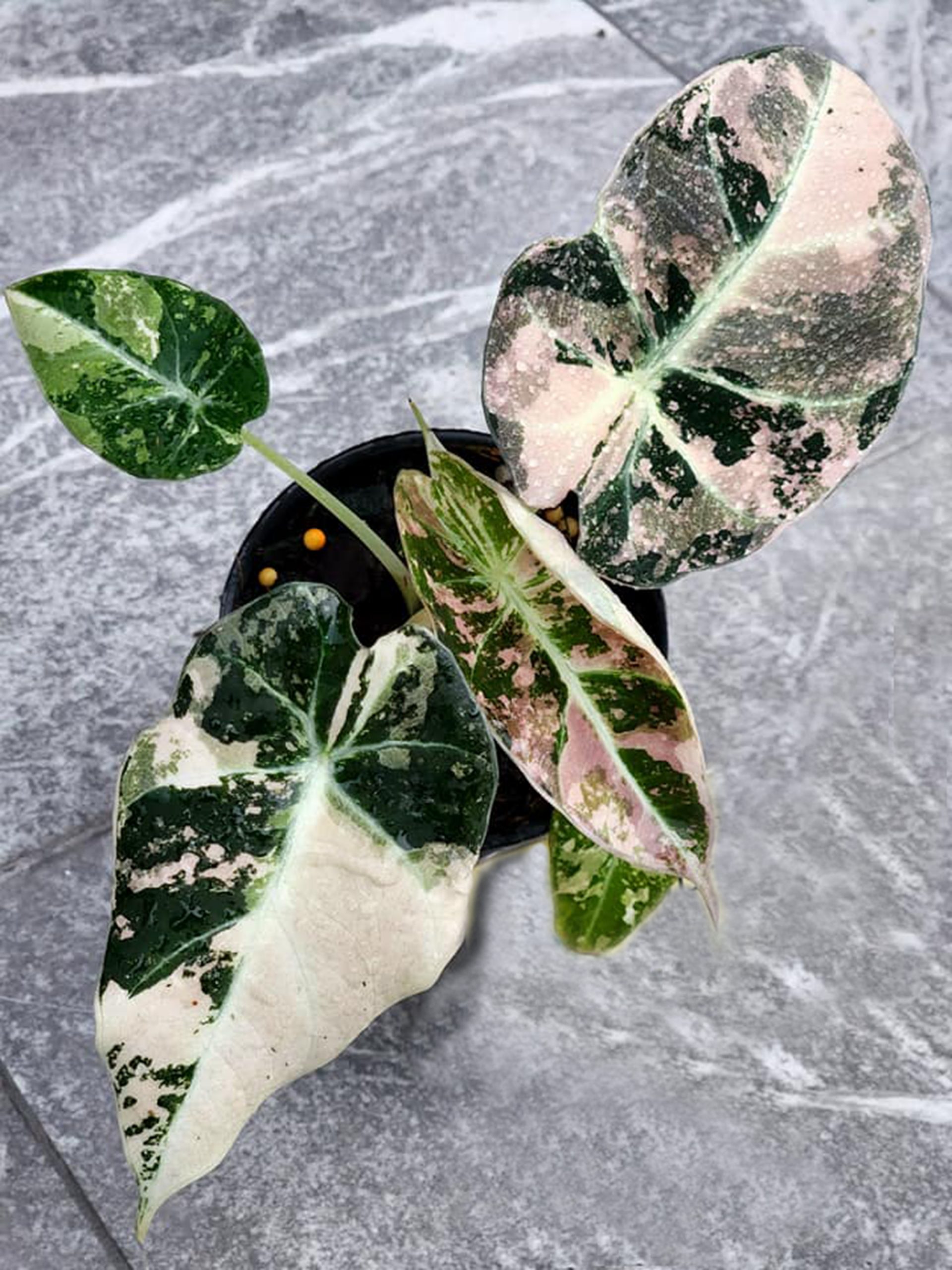
Kew’s Plants of the World Online accepts Alocasia as a genus in the aroid family, native from tropical and subtropical Asia to eastern Australia, and currently lists 91 accepted species. Retail names add hybrids, cultivars and variegated selections, so “elephant ear” alone is not enough to identify a plant or predict its mature size.
Compact plants such as jewel-type Alocasias can fit a shelf or plant cabinet, while large forms can become a floor-level focal point. Before buying, check the botanical/trade name, actual-plant photographs, mature scale and whether the listing shows a juvenile or established specimen.
1. Sculptural foliage creates a strong focal point
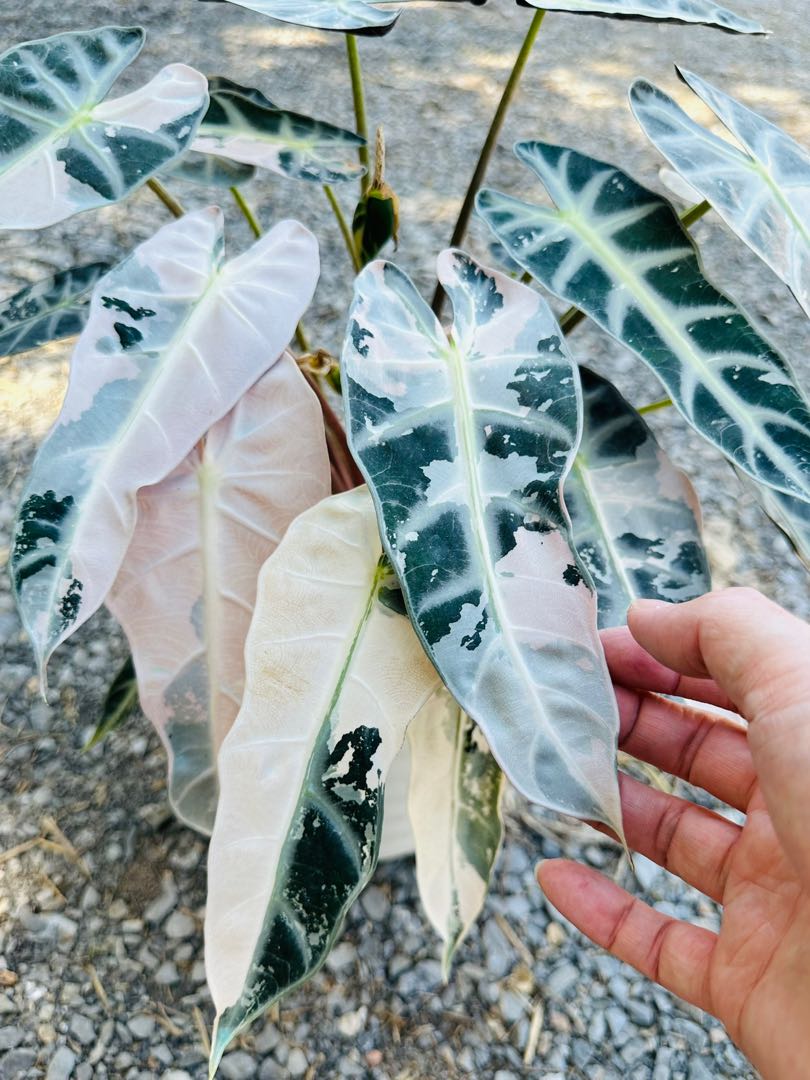
Alocasia leaves can be arrow-shaped, shield-like, deeply veined, metallic, velvety, rippled or strongly variegated. The upright petioles often hold the blade away from surrounding foliage, so one plant can create a clear silhouette without a crowded arrangement.
This is a design benefit, not a medical claim. Use it intentionally: match leaf scale to the room, leave space for new petioles to open and place the pot where the plant can receive suitable light without blocking a walkway. A compact patterned plant and a large green elephant ear solve different display problems.
2. The genus offers real collection diversity
Collectors are not limited to one green leaf shape. Species and cultivated forms differ in blade texture, venation, petiole pattern, color, size and growth rhythm. That makes it possible to build a coherent collection around traits—velvet leaves, silver venation, dark foliage or variegation—rather than accumulating near-duplicates.

For a textured example, see the dedicated Alocasia Dragon Scale guide. If you prefer narrow, blade-like foliage, compare the Alocasia scalprum profile. Keep those species/cultivar pages responsible for identification and care; this page explains why the wider group appeals to collectors.
3. Alocasia makes plant feedback visible
An Alocasia rewards observation. You can track a rolled leaf expanding, petiole angle changing with usable light, older foliage being retired, roots filling a clear pot or offsets developing near the parent. Those visible changes help a grower connect care decisions with plant response.
The learning value comes from recording conditions, not from chasing a universal schedule. Note light changes, pot weight, moisture below the surface, room temperature and which leaf changed first. When leaves curl or distort, use the indoor-plant leaf-curling diagnostic before simultaneously watering, fertilizing, misting and spraying.
4. Offsets can renew or expand a collection
Many cultivated Alocasias produce offsets or small corm-like structures around the parent. When these have enough viable tissue and roots, they can be separated to create another plant or preserve a line. This can make a well-grown specimen more than a static decoration.
Do not divide only because a fixed number of months has passed. Check whether the parent is healthy, the offset is identifiable, and separation can occur without stripping most roots from either plant. A stressed, recently shipped or actively rotting plant is a poor propagation candidate.
5. Plant care can be a rewarding nature activity
Watering, cleaning leaves, checking roots and documenting new growth can create a purposeful break from screen-based work. A small randomized crossover study of 24 young men found that a plant-transplanting task felt more comfortable and soothing and produced different short-term physiological responses than a computer task. The study itself also notes that rigorous evidence is limited.
That research tested interaction with an indoor plant, not Alocasia, and it did not show that a houseplant treats anxiety, depression or cardiovascular disease. Treat enjoyment and routine as personal benefits; use qualified health professionals for medical care.
Does Alocasia purify indoor air?
Leaves exchange gases and plants can remove some volatile compounds in sealed experimental chambers. That does not mean one Alocasia cleans a ventilated bedroom. The widely repeated NASA claim did not establish Alocasia-specific room performance.
A real-world analysis published in the Journal of Exposure Science & Environmental Epidemiology converted chamber results into clean-air delivery rates. It estimated that roughly 10–1,000 plants per square meter of floor space would be needed to match ordinary building air exchange. For indoor air problems, control the pollutant source, ventilate appropriately and use proven filtration where needed; enjoy Alocasia as a plant, not an air-cleaning appliance.
Can Alocasia humidify a room?
Alocasia transpires water, so leaves participate in the local moisture cycle. The room-level effect of one pot is small and changes with leaf area, light, ventilation, temperature and soil moisture. It cannot guarantee a healthy indoor humidity range or treat dry skin and respiratory symptoms.
Use a hygrometer if humidity matters. Address excessive humidity and wet surfaces as seriously as dry air, because persistent dampness can support mold and pests. Choose a properly sized humidifier/dehumidifier or ventilation strategy for the room instead of overwatering plants to chase a number.
Safety: Alocasia is toxic if chewed
ASPCA Animal Poison Control lists Alocasia spp. as toxic to dogs and cats because of insoluble calcium oxalates. Chewing can cause oral pain and swelling, drooling, vomiting and difficulty swallowing. NC State Extension also flags human ingestion, eye injury and contact dermatitis.
- Place the plant where children and animals cannot reach fallen leaves, offsets, sap or potting debris.
- Wear gloves if sap irritates your skin, avoid touching eyes and wash tools/hands after pruning.
- If a person chews the plant or develops mouth/eye symptoms, rinse exposed areas and contact local poison-control or emergency services for case-specific advice.
- If a pet chews it, contact a veterinarian or animal poison-control service promptly; do not induce vomiting or give medication without professional direction.
This safety trade-off matters more than a decorative benefit. A household with a persistent plant-chewing pet may be better served by a non-toxic plant in the accessible area.
How to choose an Alocasia that fits your home
Fit the plant to the household before choosing the most dramatic leaf.
| Your constraint | Check before buying | Avoid assuming |
|---|---|---|
| Limited space | Mature blade/petiole spread and pot height | A juvenile stays tabletop-sized |
| Pets or children | A truly inaccessible placement and cleanup plan | A high shelf removes every falling-leaf risk |
| Lower indoor light | Window exposure or a measured grow-light plan | Dark foliage means a dark room is suitable |
| Frequent travel | Root-zone moisture stability and backup care | “Tropical” means continuously wet |
| Collector premium | Actual plant, identity, roots, pests and growth point | The rarest label is the healthiest specimen |
Basic care needed to keep the benefits real
- Light: start with bright, filtered light and acclimate before stronger exposure. Watch petiole stretch, leaf size and scorch.
- Water: check the root zone and pot weight. Water through when the upper mix has dried somewhat, then drain fully; do not keep a dense mix permanently saturated.
- Root zone: use a clean, airy mix and a pot with drainage. An oversized pot stays wet around a small root system for longer.
- Humidity and airflow: aim for stable conditions appropriate to the plant without routine leaf wetting or stagnant enclosure.
- Pests: inspect leaf backs, petiole bases and new growth for mites, thrips, scale and mealybugs.
- Dormancy/leaf loss: diagnose roots, temperature, light and plant history before discarding a firm corm or repeatedly adding fertilizer.
FAQ
What are the main Alocasia plant benefits?
The strongest benefits are ornamental foliage, collection diversity, visible plant-learning opportunities, propagation through healthy offsets and the enjoyment of a plant-care routine.
Does Alocasia remove 87% of toxins in 24 hours?
No credible Alocasia-specific study supports that room claim. Sealed-chamber plant results do not translate into meaningful passive air cleaning in a normally ventilated home.
Is Alocasia good for asthma or allergies?
Do not use it as a treatment. Soil, pollen, damp media and plant debris can also be relevant to sensitive people. Follow a clinician’s advice and proven indoor-air controls.
Is Alocasia safe for cats and dogs?
No. ASPCA lists Alocasia as toxic to cats and dogs because chewing releases insoluble calcium oxalates that can cause painful mouth and swallowing symptoms.
Is Alocasia low maintenance?
Not always. Many types respond visibly to cold, root-zone imbalance, low usable light and pests. Choose it if you can observe conditions rather than follow a fixed watering calendar.
Sources and evidence boundaries
- Kew Plants of the World Online: Alocasia taxonomy and distribution
- Cummings and Waring: real-room interpretation of potted-plant VOC removal
- Indoor plant interaction crossover study and stated limitations
- ASPCA: Alocasia toxicity to cats and dogs
- NC State Extension: Alocasia safety and growing context