
Pothos cultivar guide
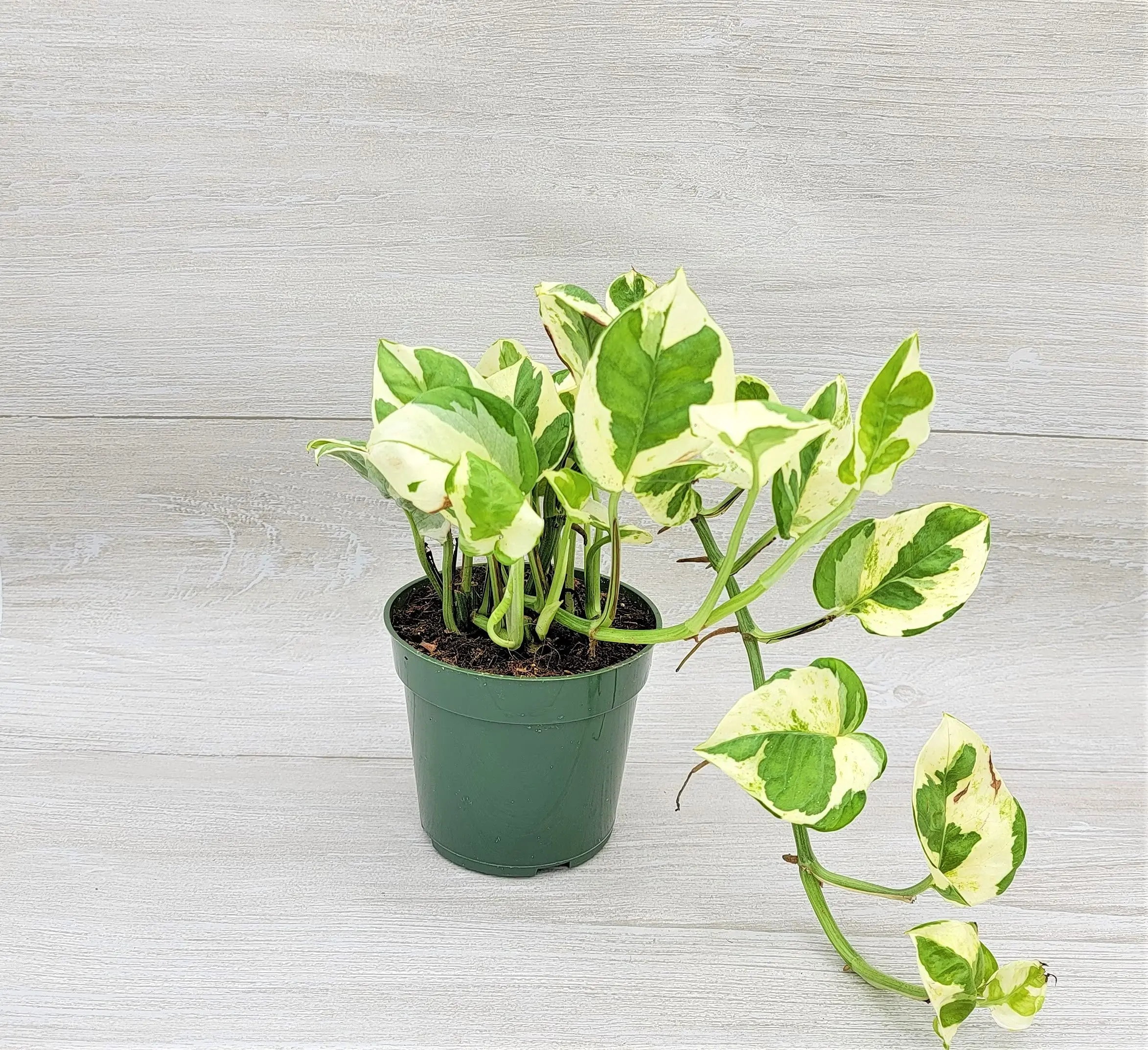
N’Joy is a compact cream-and-green selection within the Epipremnum aureum horticultural framework. Identify it from repeated short internodes, small broad leaves and clear green fields on cream-to-white tissue—not from one unusually pale leaf or a seller adjective.
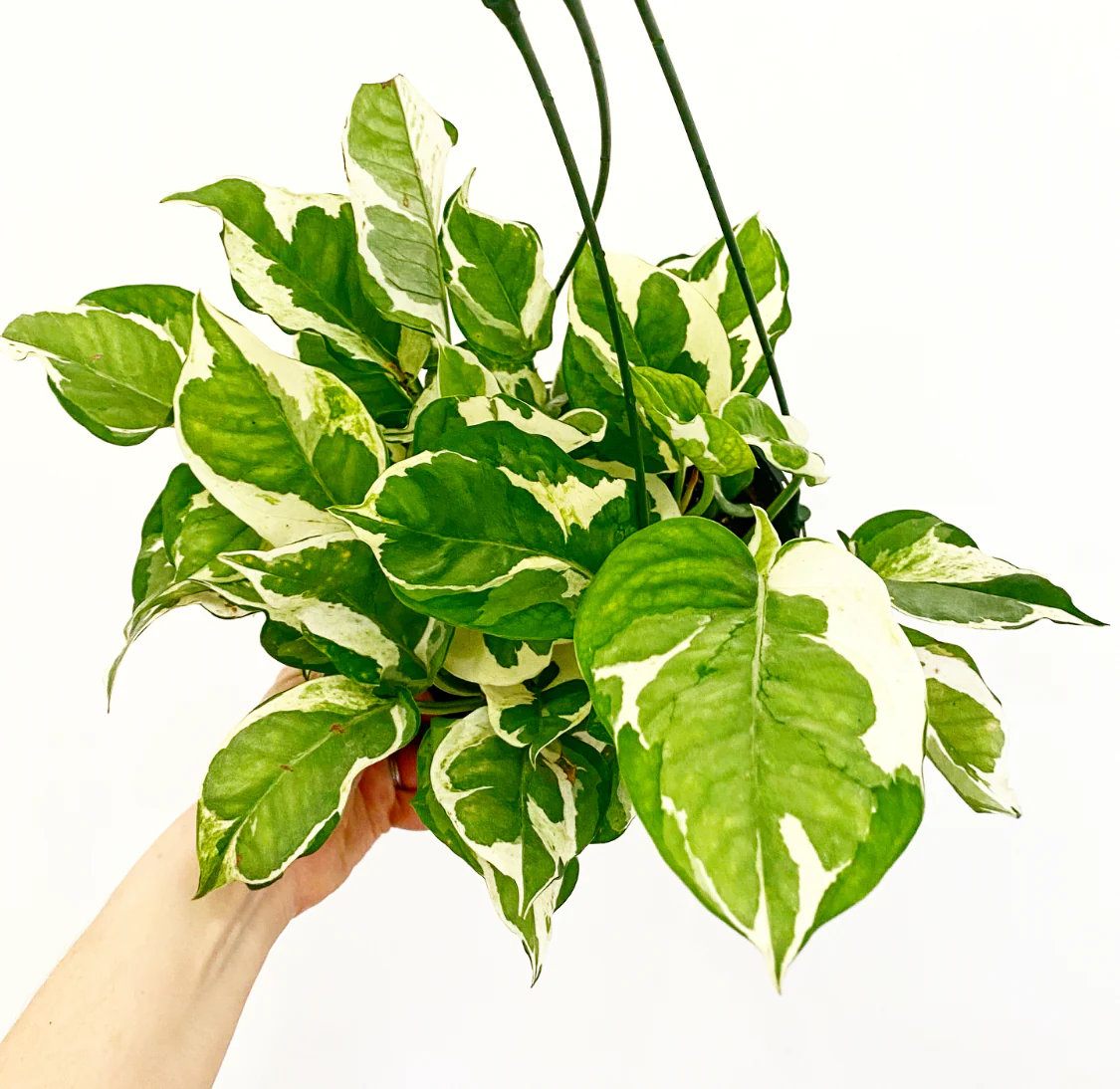
What is N’Joy pothos?
U.S. Plant Patent PP19,965 describes NJOY as a branch mutation selected from Marble Queen-derived stock near Mumbai, with compact growth, short internodes, small broad leaves and distinct green/cream-white pattern. The patent application used the name Epipremnum pinnatum ‘NJOY’.
That filing does not settle current species treatment. Singapore NParks flags the classification issue and recognizes N’Joy within Epipremnum aureum because Marble Queen belongs to E. aureum. NC State also lists N’Joy under E. aureum cultivars. Kew accepts E. aureum as a species native to Society Islands (Mo’orea).
N’Joy identity at a glance
| Signal | Supports N’Joy | Needs more context |
|---|---|---|
| Internodes | Relatively compact/short sequence under suitable conditions. | Weak light can stretch any vine; nursery pruning can create temporary density. |
| Leaf form | Small, relatively broad/ovate juvenile leaves. | Age, support, pot crowding and root health change size. |
| Pattern | Distinct green fields on cream-white background, repeated across leaves. | One pale/reverted/damaged leaf cannot identify a cultivar. |
| Source | Traceable N’Joy-labelled parent/lot and exact photos. | “Green N’Joy” or “Golden N’Joy” seller wording without a record. |
| Condition | Firm roots/stem and healthy newest growth. | Bleaching, edema, pests or transit scars can mimic pattern differences. |
- Request neutral-light photos of several hardened leaves.
- Confirm whether the image is exact plant, batch, mother plant or representative stock.
- Inspect stem, viable nodes, active growth point and roots.
- Separate current pattern from guarantees about future leaves.
- Check whether the offer is an established pot, cutting, bare-root import or tissue-culture stage.
Pattern is genetic expression, not a light switch
Light can change how well a variegated plant grows and how readable its pattern appears, but it does not rewrite the clone’s genotype on command. Very weak usable light can produce stretched growth and reduced pattern contrast; sudden direct sun can scorch pale tissue. Move exposure gradually and judge several new leaves.
Do not remove every greener leaf automatically. Green tissue supports photosynthesis, while cream-white tissue is more light-sensitive and contributes less. Prune only with a clear growth goal, a viable node map and enough green tissue left to support the plant.
Light, water and root-zone care
Start in bright filtered light. Observe the direction of damage: hot-window bleaching typically faces exposure, while widespread yellowing plus a heavy wet pot points toward the root zone. Change one variable at a time.
Water from pot weight and moisture depth rather than a fixed weekday. When the upper rooted mix has dried and the pot is meaningfully lighter, wet the root ball evenly and drain runoff. A dense multi-cutting pot, fresh cutting and established hanging vine dry at different rates.
Use an aerated moisture-retentive mix and a freely draining container only modestly larger than the roots. Repot for compaction, failed drainage or root crowding—not automatically because a calendar says so.
Keep growth compact without overpromising “bushiness”
N’Joy’s patent describes compact growth, but a vine does not branch from every cut. Commercially full pots often contain multiple rooted cuttings. If you want a denser container, propagate viable node cuttings and replant established units rather than expecting leaf pruning to create branches everywhere.
The Golden Pothos propagation guide owns node selection, water/substrate rooting and pot transition. Label cuttings so a cream-green collection does not lose its source identity.
Troubleshoot N’Joy by condition
| Observation | Possible contributors | Next check |
|---|---|---|
| Yellow leaves + heavy pot | Prolonged saturation, cold roots or root loss. | Drainage, root firmness, odor and drying time. |
| Brown cream edges | Sudden sun/heat, salts, cold contact or dry root episode. | Damage orientation and recent exposure/watering changes. |
| Long gaps + small leaves | Weak usable light, root stress or sparse single-vine pot. | Light geometry, roots and number of independent vines. |
| Pattern becomes greener | Current expression, weak light, reversion or mislabel. | Several new leaves, source record and stem pattern. |
| Newest leaf distorted | Thrips, mites, scale, mechanical injury or root stress. | Both surfaces, stem, roots and active pests. |
Choose the next owner
The Epipremnum care hub owns the full light, watering, feeding, support and troubleshooting workflow. Use the Epipremnum types hub before comparing N’Joy with Marble Queen, Manjula or another cream-green label.
Continue by intent
Sources and limits
- U.S. Plant Patent PP19,965: Epipremnum ‘NJOY’ — selection history and described phenotype; taxonomy reflects the filing.
- Singapore NParks: Epipremnum ‘NJOY’ — species-classification boundary and horticultural record.
- NC State Extension: Epipremnum aureum — cultivar list, growth, pests/root-rot and safety context.
- Kew POWO: Epipremnum aureum — accepted species and native range.
Evidence limit: patent measurements describe plants under stated greenhouse conditions and do not guarantee home size, rate or pattern. Exact-plant evidence remains necessary.
