
Pothos cultivar guide
Neon Pothos is the solid-chartreuse cultivar Epipremnum aureum ‘Neon’. Identify it from repeated unpatterned yellow-green leaves on a pothos vine—not from brightness alone, which changes with leaf age, exposure and photography.
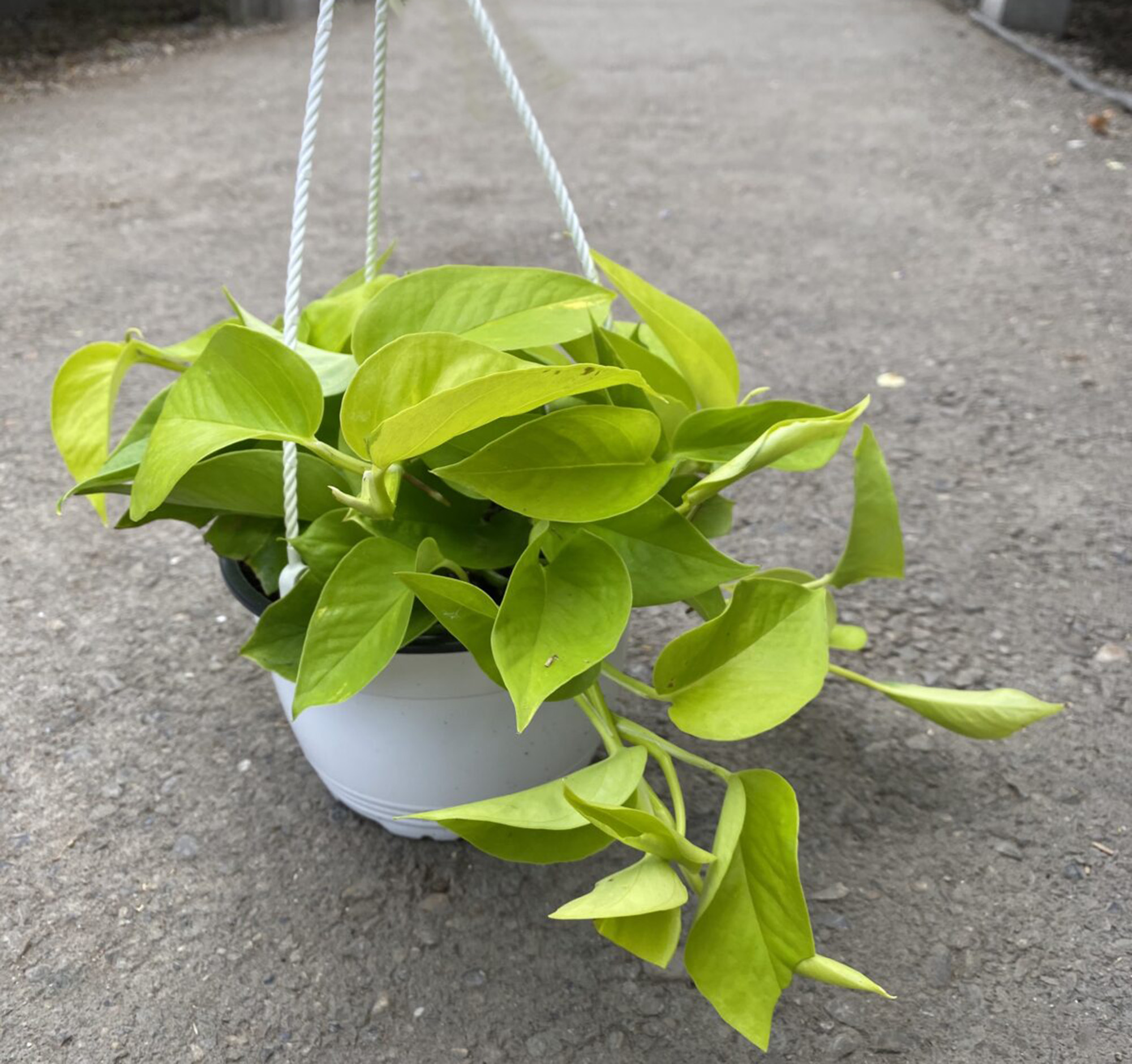
What is Neon Pothos?
Costa Farms and NC State list Neon as a cultivar of Epipremnum aureum. Costa describes bright chartreuse or golden-yellow, non-variegated leaves, with younger leaves usually brighter and older foliage becoming deeper green. Kew accepts E. aureum as a species native to Society Islands (Mo’orea), not “Asian rainforests.”
Neon is a cultivar label, not a promise that every photograph or leaf will match a fluorescent color swatch. White balance, flash, grow lights, leaf age and nutrition can all change how the color reads. Use a repeated plant-level sequence and exact-plant evidence.
Neon identity at a glance
| Signal | Supports Neon | Needs more context |
|---|---|---|
| Color | Solid chartreuse to golden yellow-green across the blade. | A saturated photo, one pale leaf or fertilizer damage. |
| Pattern | No intentional cream sectors or contrasting green border. | Irregular dark edging may suggest Neon Joy or another label. |
| Age sequence | New growth brighter; hardened older leaves often deepen. | Uniform yellowing plus root stress is not cultivar color. |
| Plant structure | Pothos vine with nodes, grooved petioles and heart-shaped juvenile leaves. | Philodendron Lemon Lime has different petiole/new-growth structures. |
| Source | Traceable Neon label plus exact-plant or current-batch photos. | Generic “neon plant” wording or an edited catalog image. |
- Ask for neutral-light photos of several hardened and emerging leaves.
- Confirm whether the image is the exact plant, current batch or representative mother plant.
- Inspect firm nodes, active growth, root condition and the number of rooted vines.
- Do not treat camera saturation or the newest leaf as a guaranteed future color.
- Confirm format: established pot, rooted cutting, bare-root plant or tissue-culture stage.
Neon vs Neon Joy and Lemon Lime Philodendron
Classic Neon Pothos is solid chartreuse without a deliberate contrasting edge. Costa Farms describes Neon Joy as brighter lime foliage with irregular medium-green margins and typically smaller leaves. That makes border pattern a useful first filter, but a single leaf remains insufficient.
Philodendron hederaceum ‘Lemon Lime’ can share a bright palette, yet it belongs to another genus. NC State’s pothos identification notes grooved petioles and the absence of conspicuous free stipules on new growth. Compare the stem, petiole and unfurling structure—not color alone.
Light for readable color
Start in bright filtered light and watch the next few leaves. Costa Farms notes that Neon color looks duller and darker in lower light, while newer leaves tend to be brighter. That supports a directional adjustment, not a universal “four hours” target. Window direction, season, glass, distance and shade change usable light.
Move exposure gradually. Sudden hot direct sun can bleach or scorch chartreuse tissue; weak usable light can contribute to longer internodes and smaller growth. Use damage orientation, internode trend and new-leaf size together before moving the plant again.
Water from the root zone, not a weekday
Check pot weight and moisture depth. When the upper rooted mix has dried and the container is meaningfully lighter, wet the root ball evenly and let excess water drain. Do not combine “keep consistently moist” with “fully dry out”; those instructions describe different root-zone states and invite overcorrection.
A full hanging basket may contain many cuttings and dry differently from a recently rooted single vine. Use an aerated, moisture-retentive mix and a freely draining pot only modestly larger than the roots. NC State notes root rot and blackened leaf margins with overwatering.
Feeding and pruning without rigid schedules
Feed only when the plant is actively growing and the root zone is healthy. Start below the product label’s maximum rate and watch the response. Pale growth can reflect roots, light, pests or nutrition; fertilizer cannot repair a saturated root system.
Prune damaged tissue or shorten a vine for a clear shape goal. A cut does not guarantee branching at every node, and a commercially full basket often contains multiple rooted cuttings. For a denser pot, root viable node cuttings and add established units. The propagation guide owns node selection, rooting and pot transition.
Troubleshoot chartreuse foliage by pattern
| Observation | Possible contributors | Next check |
|---|---|---|
| Older leaves deepen green | Normal maturation or lower usable light. | New-leaf color, internodes and measured exposure trend. |
| Many leaves yellow + heavy pot | Prolonged saturation, cold roots or root loss. | Root firmness, odor, drainage and drying time. |
| Pale window-facing patches | Sudden sun/heat or hot glass contact. | Damage orientation and recent placement change. |
| Long gaps + small leaves | Weak usable light, sparse pot or root stress. | Light geometry, roots and number of independent vines. |
| Spots on newest growth | Pests, mechanical injury, edema or disease. | Both leaf surfaces, stem, roots and progression before spraying. |
Safety and the next owner
NC State classifies E. aureum as containing calcium oxalate crystals and notes risks to people and pets. Keep cut material away from mouths and eyes, wash after pruning and place the vine beyond unsupervised children and animals.
Use the Epipremnum care hub for the full light, watering, feeding, support and pest workflow. Use the Epipremnum types hub when comparing Neon with cream-green or pinnatum selections.
Continue by intent
Sources and limits
- Costa Farms: Pothos varieties — Neon color, lack of variegation and leaf-age/light context.
- Costa Farms Pothos guide — horticultural listing of E. aureum ‘Neon’.
- NC State Extension: Epipremnum aureum — cultivar list, structure, root-rot and safety context.
- Kew POWO: Epipremnum aureum — accepted species and native range.
Evidence limit: Horticultural color descriptions are directional. Exact appearance depends on the photographed plant, leaf age, exposure, health and camera rendering.
