Greenboog propagation guide
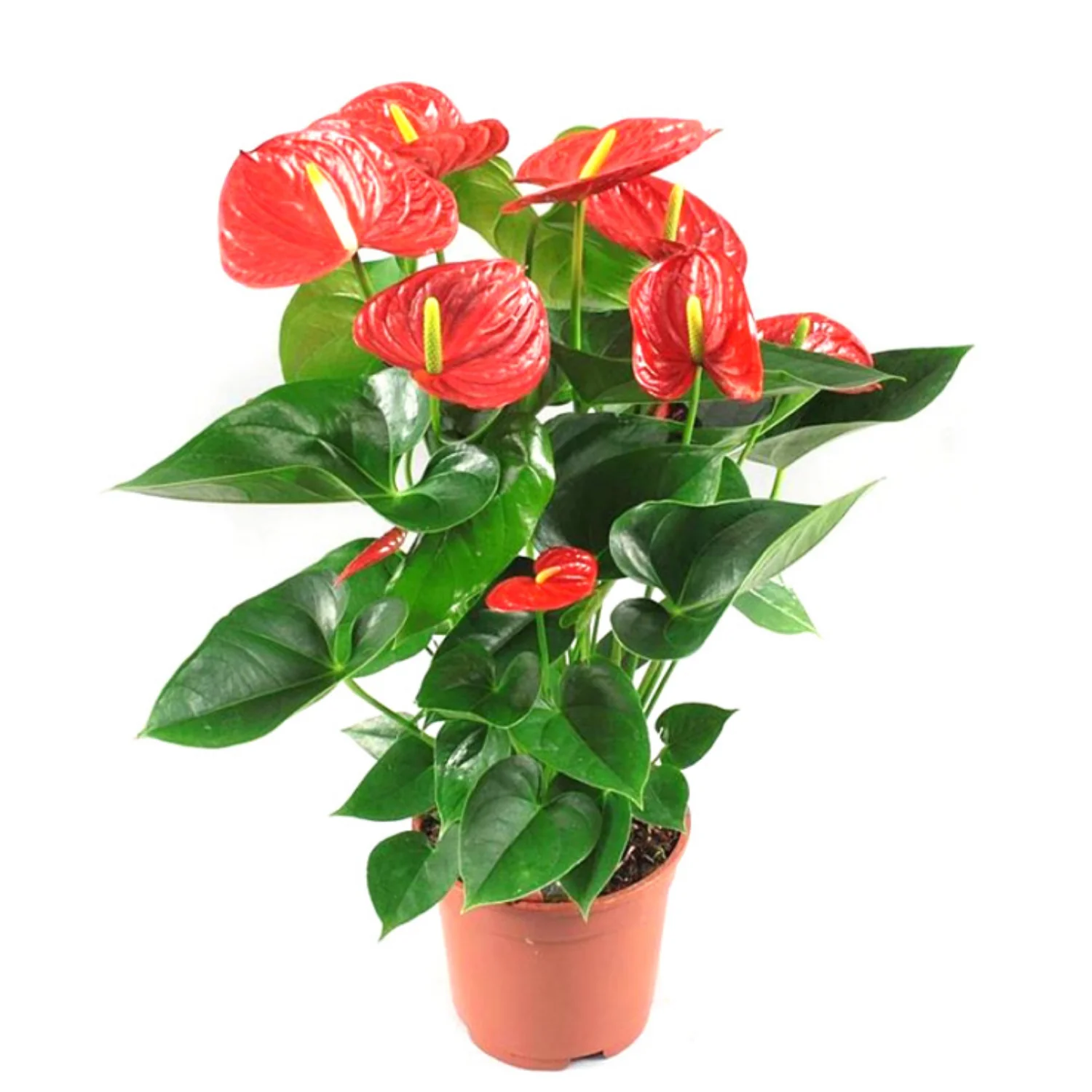
Anthurium propagation starts with plant architecture. The safest method changes with a clumping flowering hybrid, an elongated climbing stem, a juvenile velvet-leaf plant, a seed pod or an in-vitro plantlet.
Match the method to the plant in front of you
Anthurium is a large genus in the aroid family Araceae. Species and hybrids do not all grow as the same compact rosette, so a universal “cut three inches below a leaf” rule can remove foliage without capturing a growth point. Inspect the stem, nodes, roots and number of crowns before cutting.
Choose a route only after the required structure is visible.
| Route | Must include | Use when | Main risk |
|---|---|---|---|
| Division | Growth point/crown plus independent roots where possible | A healthy plant has separable basal clusters | Root and crown damage from forcing an immature split |
| Stem section | Viable node or growth point; roots are a major advantage | A plant has an exposed or elongated stem | Leaf-only or internode-only pieces cannot restart growth |
| Seed | Mature viable seed from a correctly developed infructescence | The goal is sexual reproduction, not a clone | Offspring may not repeat a named hybrid or variegation |
| Tissue culture | Laboratory-produced plantlet with an acclimation plan | Buying in-vitro material rather than cutting a houseplant | A sealed-vessel plantlet is not ready for established-plant care |
Division: preserve roots on both sides
Division is usually the lowest-guesswork route when a mature Anthurium has two or more separable growth centers. Water according to the plant’s normal need before the procedure—not to make a saturated root ball—then slide it from the pot and remove only enough loose medium to see where roots and crowns connect.
Tease natural sections apart with your fingers. If a shared stem must be cut, use a clean sharp blade and make the smallest controlled wound that leaves viable tissue on both sides. Do not halve a single crown merely to create two pieces. Pot each division in a small stable container that fits its remaining roots.
Stem sections: find a node or active growth point
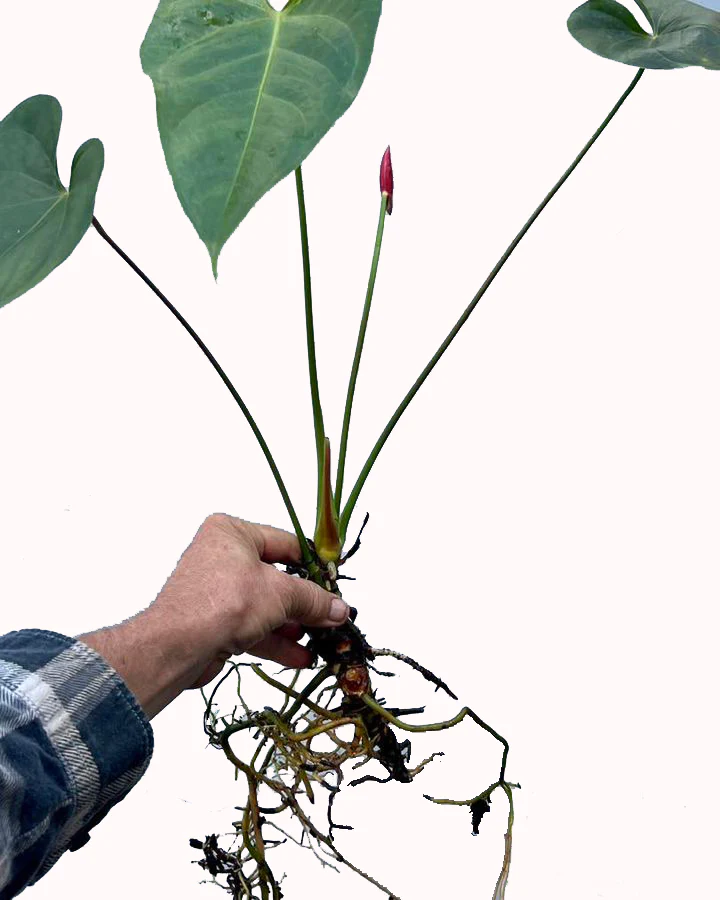
An elongated Anthurium may expose stem between older leaf scars and aerial roots. A viable cutting needs a node or active growth point; existing roots reduce the establishment gap. Make the cut through firm unblemished tissue with a sanitized blade. Remove any decaying root or leaf with a separate clean cut rather than carrying damaged tissue into the propagation pot.
A leaf blade with its petiole is not a complete cutting. It may remain green in water for a time, but without viable stem/growth tissue it cannot build a new Anthurium plant. Likewise, a length measurement does not prove viability: a short rooted node may be more complete than a long smooth petiole.
Sanitation is part of propagation, not an optional extra
UF/IFAS notes that bacterial diseases can spread through wounds made during cutting and division. Isolate plants with wet lesions, yellow halos, rapid collapse or suspicious ooze instead of propagating them. Clean the work surface, wash hands or change gloves between plants, and disinfect tools using a product and contact time appropriate for the tool.
- Before cutting: label the plant, photograph its condition and identify every intended growth point.
- Between plants: clean debris from the blade before disinfection; debris can protect contaminants.
- After cutting: keep the wound clean and avoid burying healthy petioles or the crown too deeply.
- During recovery: separate new propagules from the main collection until they show stable health.
Rooting medium, water and humidity
A division with usable roots can move directly into a fine but airy aroid mix. A rootless stem section needs close moisture control: the medium should stay lightly moist around viable tissue while retaining oxygen. Water propagation makes changes visible but does not remove rot risk; transfer roots must later adapt to a substrate. Choose the method you can monitor consistently.
Use a clear cover only when it prevents excessive water loss and you can also manage condensation, warmth and airflow. “Very high humidity” is not a substitute for roots, and opening a bag once a week is not a universal ventilation schedule. If tissue softens, odor develops or condensation never clears, inspect immediately.
Commercial rooting hormone is optional, not a repair for missing nodes or unhealthy tissue. Do not coat cuttings with honey or improvised willow preparations as though dosage and sanitation were controlled. If using a registered product, follow its label and avoid contaminating the main container.
Warm, bright and steady aftercare
Place the propagule in bright filtered light and stable warmth without intense sun on poorly rooted leaves. Keep the root zone evenly but lightly moist, then let its air spaces reopen. A recently divided plant with fewer roots may use water much more slowly than its parent did in the old pot.
Do not fertilize to force roots. Wait until the propagule is stable and producing evidence of root activity or new growth, then resume a label-directed feed appropriate to the medium. Avoid stacking division, a large repot, strong fertilizer and a major light move on the same day.
Use evidence—not a 4–8 week promise
Root branching and stable new growth matter more than a promised week count. Temperature, method, species, stem reserve, existing roots and medium all change the timeline. Gentle resistance can suggest anchoring, but repeated tugging tears young roots; inspect through a clear pot or drainage opening when possible.
| Observation | Ask first | Safer response |
|---|---|---|
| Firm piece, no new leaf | Are roots branching and conditions stable? | Keep monitoring; foliage may lag behind root recovery |
| Soft dark stem or odor | Is tissue staying cold, wet or contaminated? | Isolate, expose the affected area and remove only to firm clean tissue if viable |
| Leaf curls after division | Did root capacity fall faster than leaf demand? | Stabilize filtered light, warmth and moisture; do not flood the pot |
| Cut leaf stays green but never grows | Was viable stem or a growth point included? | Do not wait indefinitely for a petiole-only piece to make a plant |
| New growth then sudden decline | Are old reserves masking failed roots? | Inspect roots, crown firmness, temperature and saturation |
Seed and tissue culture are different workflows
Seed propagation produces genetically variable offspring and requires viable fresh seed; it is not a reliable way to clone a named cultivar or hybrid. Tissue culture is a laboratory multiplication method used widely in commercial Anthurium production. A buyer receives a plantlet, not a home stem cutting, so the first job is staged acclimation.
If you are handling in-vitro material, follow the tissue-culture acclimation guide. Current availability belongs to the tissue-culture Anthurium collection, not to this propagation tutorial.
Propagation FAQ
Can Anthurium grow from a leaf cutting?
Not from a detached blade and petiole alone. A complete propagule needs viable stem tissue with a node or growth point; roots improve its odds.
Is division or a stem cutting better?
Division is usually simpler when the plant already has separable crowns and roots. A stem section suits an elongated plant whose viable node or growth point is clear.
Do I need rooting hormone?
No. Correct viable tissue, sanitation, warmth, oxygen and moisture control come first. Follow the label if you choose a commercial product.
Can I root Anthurium in water?
A viable stem section may root in water, but water cannot make a leaf-only piece viable and water roots still face a later substrate transition.
When can I pot or resume normal care?
Use evidence: firm tissue, branching roots, stable anchoring and sustained new growth. Do not rely on one universal week count.
Choose the next owner
Use the Anthurium collection for live formats, price and availability. Compare plant identities in the Anthurium types guide, and use the general Anthurium care owner after a division or cutting is established. For household fit, the Anthurium benefits guide separates visual value from exaggerated air-cleaning claims.