Rare-aroid buying comparison
Monstera and Philodendron belong to the same plant family, but the names are not interchangeable. Before paying for rarity or variegation, identify the accepted botanical layer, the seller descriptor, the growth architecture and the exact format that will ship.
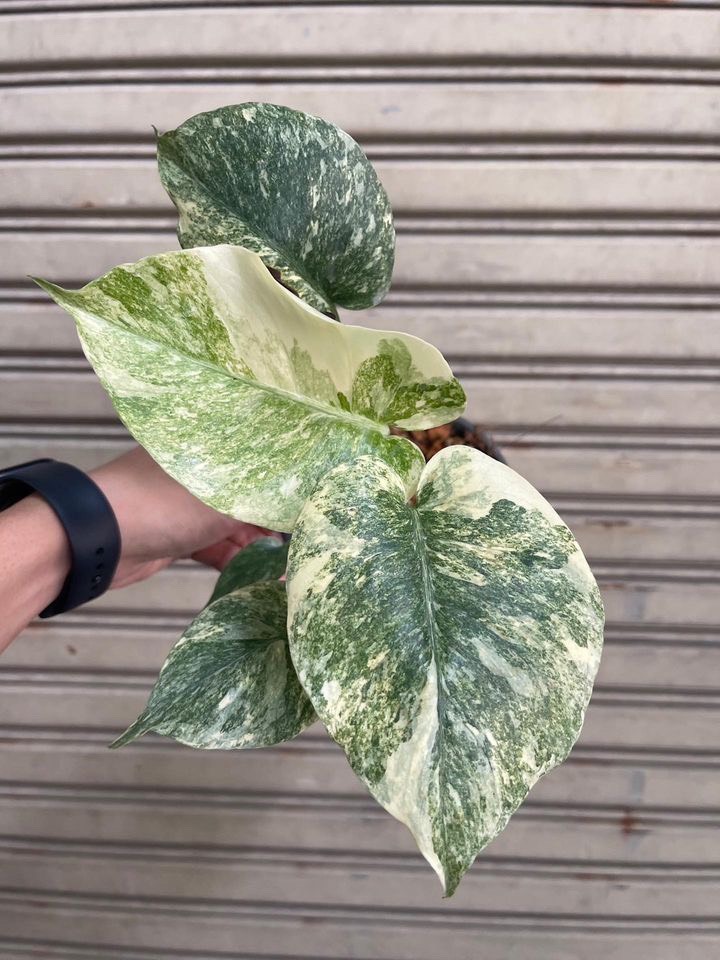
They share a family, not a genus
Royal Botanic Gardens, Kew accepts Monstera and Philodendron as separate genera in Araceae. Kew describes Monstera as climbing hemiepiphytes whose leaves may remain entire or develop perforations and splits. Philodendron is broader in habit: it includes climbers, compact rosulate plants, rhizomatous terrestrials and other forms.
That diversity makes shortcuts unreliable. NC State Extension notes that the common name “split-leaf philodendron” does not turn Monstera deliciosa into a Philodendron. It also separates climbing Philodendron from non-climbing or self-heading types. A familiar common name is not a genus diagnosis.
| Check | Monstera | Philodendron |
|---|---|---|
| Genus status | Accepted genus; not a synonym for Philodendron. | Accepted genus; not a catch-all name for split or perforated aroids. |
| Architecture | Plan for a climbing stem and changing juvenile-to-mature foliage. | Verify the exact plant: climbing, self-heading, rhizomatous and other habits create different footprints. |
| Leaf clues | Fenestration can help, but juvenile leaves may be entire. | Leaf shape varies widely; one leaf rarely establishes identity or mature size. |
| Best evidence | Accepted name plus stem, node, leaf sequence, roots and provenance. | Accepted species/hybrid/cultivar layer plus whole-plant habit, roots and provenance. |
Let architecture decide the room
Do not buy a leaf pattern and solve the plant later. A climbing Monstera needs vertical clearance, a stable support near the stem and room for petioles to orient toward useful light. A climbing Philodendron may need a similar path, while a self-heading or rhizomatous Philodendron can demand more horizontal space and a different pot/support plan.
If the selected plant is a Monstera, use the pre-buy setup checklist to plan light, drainage, support, quarantine space and arrival observation. For a deeper Philodendron comparison by identity and buyer risk, use the rare Philodendron buyer guide.
Read seller names in layers
A listing can combine an accepted name with a commercial pattern or selection descriptor. Kew currently accepts Philodendron × joepii as a hybrid name, with the formula P. bipennifolium × P. pedatum. The added word “Variegated” still needs evidence from the current plant or documented propagation line.
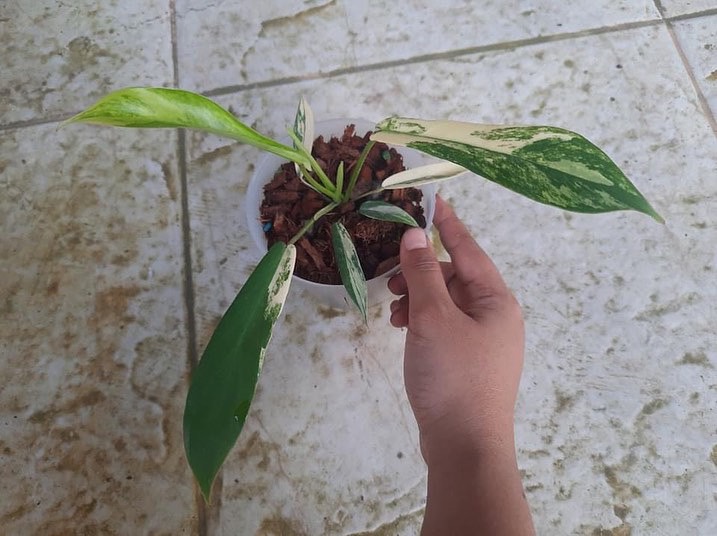
Name status also changes with evidence and the authority consulted. Kew currently accepts Philodendron goeldii and lists Thaumatophyllum spruceanum as a synonym. That is the reverse of a common online shortcut. Record the authority and access date instead of silently swapping a product label.
Compare what will actually arrive
The exact listing is the purchasing evidence. A beautiful category image can guide discovery, but the selected variation, current description and order terms must tell you what the price covers.
| Layer | Verify | Why it matters |
|---|---|---|
| Name | Accepted species/hybrid/cultivar where documented; seller descriptors shown separately. | Prevents a trade nickname from becoming a false botanical claim. |
| Image scope | Exact plant, representative batch or parent/reference image. | Sets a realistic boundary for variegation, maturity and condition. |
| Format | Rooted pot, rooted cutting, unrooted cutting, acclimated starter or in-vitro plantlet. | Changes the first-week workload and failure risk. |
| Structure | Stem, node/growth point, leaf sequence, roots, pot/medium and scale. | Shows whether the current plant can support the claimed identity and next stage. |
| Terms | Quantity, grade, dispatch window, destination paperwork and arrival policy. | Separates evergreen guidance from changing commercial conditions. |
- Open the genus category and shortlist by current stock, format and mature footprint.
- Read the selected option—not only the title—and identify the exact-image scope.
- Match the current root/propagation stage to the transition you can manage.
- Save listing and order evidence, then review the current shipping information.
Sources
- Kew POWO: accepted Monstera genus and morphology
- Kew POWO: accepted Philodendron genus and diverse habits
- Kew POWO: accepted Philodendron × joepii hybrid name
- Kew POWO: Philodendron goeldii name status and synonym
- NC State Extension: Monstera is not a Philodendron
- NC State Extension: climbing and self-heading Philodendron