
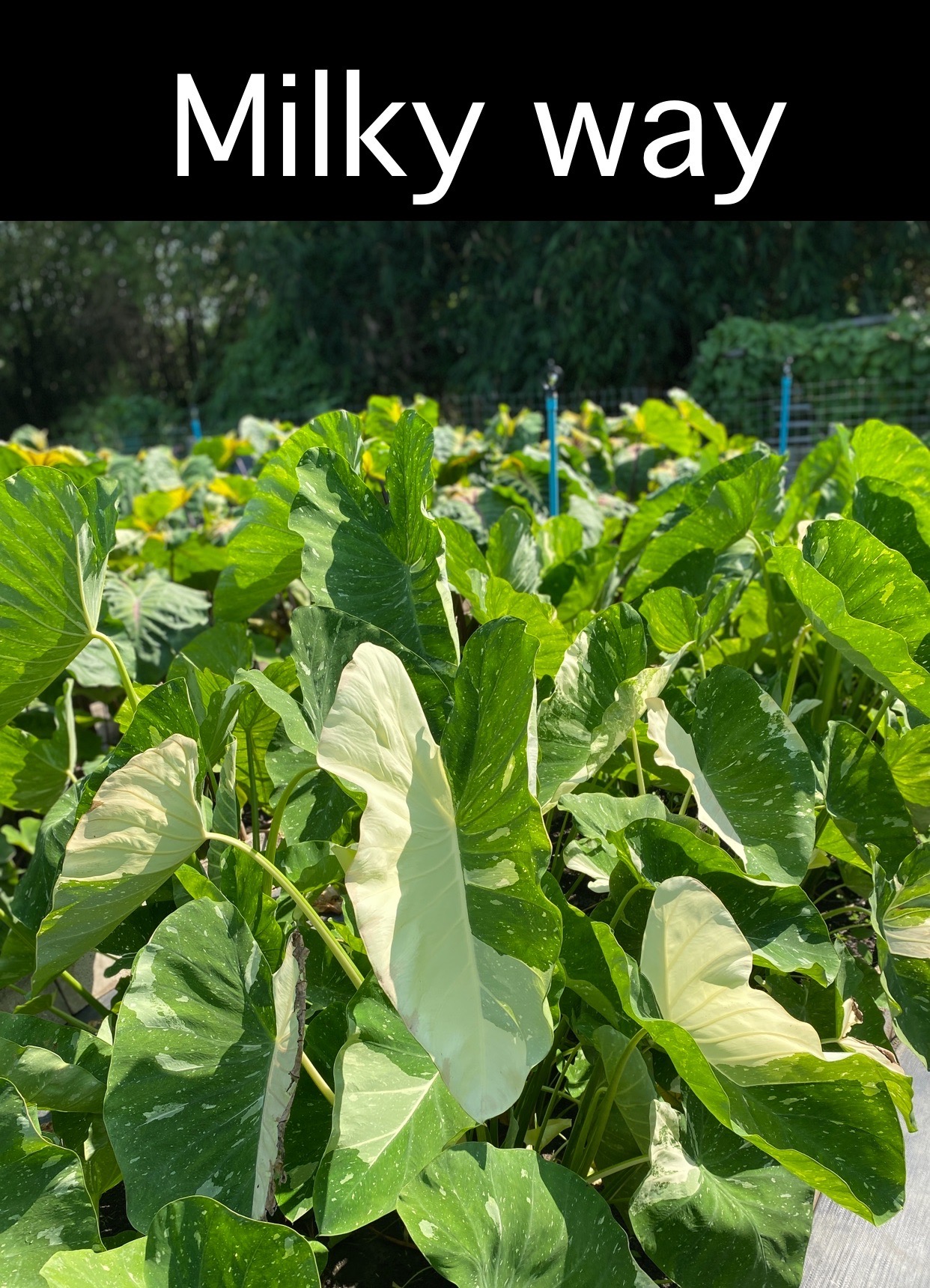
Greenboog observation guide
A field-friendly way to notice leaf, stem, root and flower features while keeping observation separate from a final identification.
Read the leaf attachment before the color
Kew’s record for Colocasia esculenta describes leaves as peltate and cordate to sagittate. “Peltate” describes where the petiole joins the blade: it attaches inside the blade rather than only at a notched edge. “Cordate” and “sagittate” describe the outline, which may look heart-like or arrow-like. They are observations that can occur together, not competing labels.
Look at several mature leaves in person where possible. Note the petiole attachment, the pathway of major veins, the blade outline and whether a petiole base sheaths the stem. Light, age, damage and growing conditions can alter color, size and posture, so none of those features should carry the entire identification.
| Feature to inspect | Useful observation | Why it is not decisive alone |
|---|---|---|
| Leaf attachment | A petiole that meets the underside inside the blade is a meaningful peltate-leaf cue. | A similar-looking aroid or an edited photograph can still mislead. |
| Petiole base | A sheathing base helps describe how leaves arise around the growth point. | It does not prove species, cultivar or parentage. |
| Underground stem | A swollen storage organ may be described in horticulture as corm-like. | Do not infer food use or safe preparation from that description. |
| Inflorescence | Aroid flowers use a spathe around a spadix; seeing one can add context. | Flowering is intermittent and its absence says little about identity. |
See the plant as a connected structure
What looks like a single “stem” above ground is often a sequence of leaf petioles emerging from a condensed underground stem. True roots arise from that plant body. In ordinary gardening language, people may call the storage organ a corm or a tuberous rhizome; the useful first step is to photograph and describe it accurately rather than forcing a label from one cropped image.
When the plant is in flower, the aroid inflorescence is a spathe surrounding a spadix. That vocabulary helps explain the structure, but flowering is not a requirement for routine observation. The Missouri Botanical Garden’s cultivated-plant record is helpful for recognizing the habit gardeners may see; compare it with Kew’s taxonomic treatment rather than treating a garden profile as a determination.
Do not turn a leaf photograph into a species verdict. Keep the plant label, complete views of the plant, notes on where it came from and any flower or underground-stem observations together. If the distinction matters for food, quarantine, invasive-plant, sale or collection records, seek a source that addresses the exact plant and location.
Use taxonomy and care guidance for different jobs
Kew’s Colocasia genus record is the right place to begin with accepted names. It cannot identify an unlabelled specimen for you. A cultivar, nursery name or seller description has a different evidence boundary. The companion Colocasia names guide explains how to keep those labels distinct.
Once you have a documented plant identity, care becomes a separate practical question. Use the Colocasia growing guide for watering, container and wintering decisions. Keep food material and preparation separate too: a genus name, an ornamental label and a visual resemblance do not establish that any plant part is appropriate to eat.
A calm observation checklist
- Record the label exactly before repotting or dividing the plant.
- Photograph the whole plant, leaf underside and petiole attachment in natural light.
- Describe the blade shape and attachment without guessing a cultivar name.
- Note any inflorescence or underground-stem feature only if it is visible without unnecessary disturbance.
- Compare the record with current taxonomy and retain provenance when identity matters.
FAQ
Does a peltate leaf prove that a plant is Colocasia?
No. It is a useful descriptive cue, but a determination requires the whole plant and reliable provenance or expert evidence.
Is a corm a food-safety claim?
No. A botanical or horticultural description of an underground organ does not establish edibility or preparation. Treat those as separate, source-specific questions.
Why does my plant not have a flower?
Flowering is not constant. Its absence is not enough to confirm or rule out an identity.
Sources used: Kew Plants of the World Online for current Colocasia and C. esculenta taxonomy and morphology; Missouri Botanical Garden Plant Finder for cultivated-plant observation context. Accessed 2026-08-27.
