Before paying for a live plant from another country, ask for details you can compare with your destination’s current rules and with the seller’s published terms. A useful answer is specific enough to be checked later.
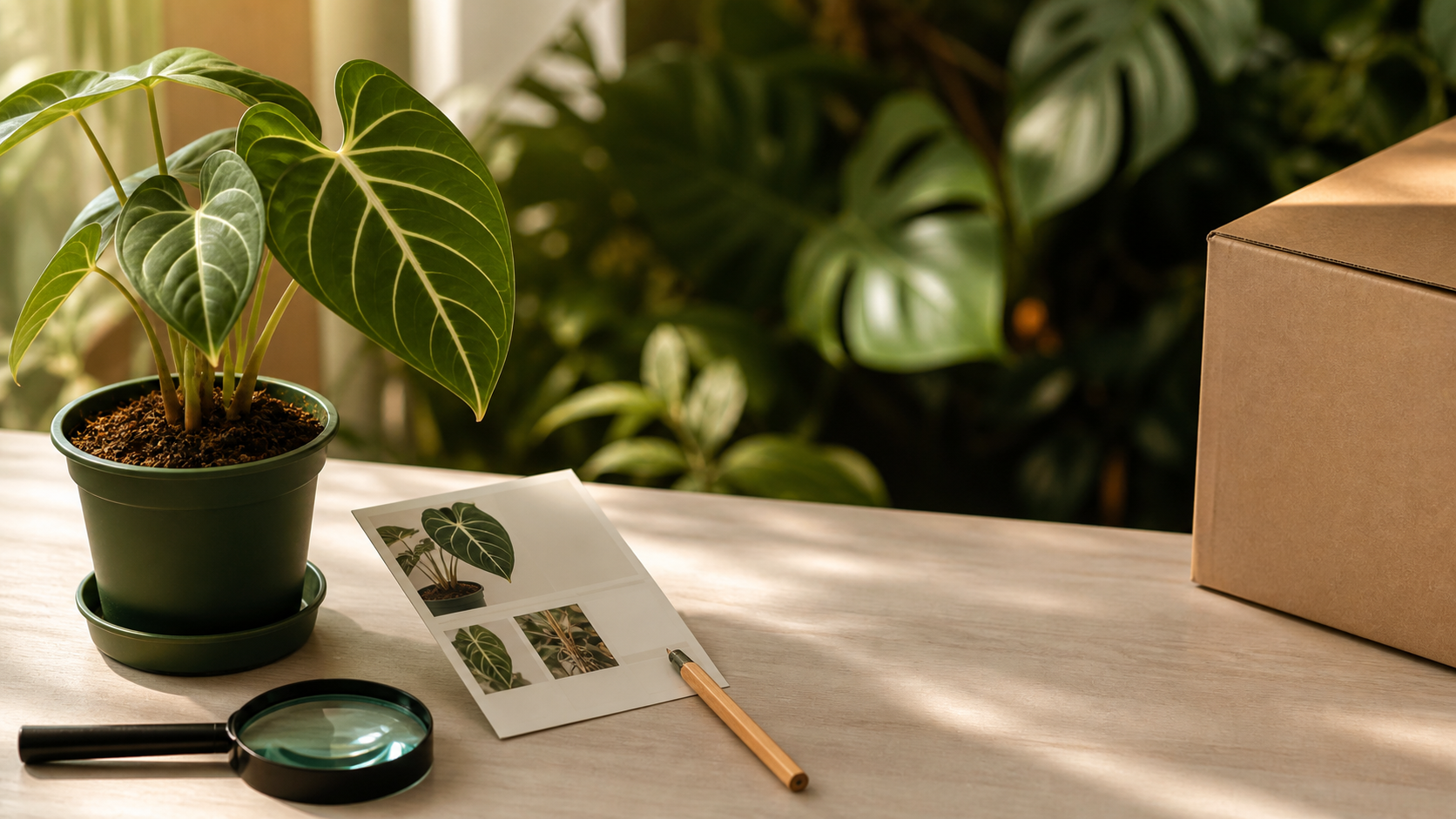
Six questions to ask before you place an international plant order
1. What exact plant and quantity are being offered?
Ask for the seller-stated scientific name, any cultivar or trade descriptor, and the number of plants or plantlets. Keep that answer with the listing and order record. For US buyers, APHIS specifically advises checking that a seller provides exact scientific names and quantities on the invoice or packing list; other destinations set their own requirements.
2. In what format will the plant be shipped?
Clarify whether it is a rooted plant, unrooted cutting or tissue-culture plantlet, and whether any growing medium will remain with it. Format can matter to a destination authority, so compare the seller’s answer with current official guidance before payment. Do not assume that a different format will be acceptable simply because it appears easier to ship.
3. What does the current listing actually show?
Request recent, item-relevant images when that is important to your decision, and ask how the pictured plant relates to the offered format and quantity. A product image is helpful context, not a shipping specification. It cannot establish that an item is eligible for import or predict its condition after a journey.
4. Which documents may accompany the order, and who is responsible?
Ask how the plant name, quantity, sender and recipient will be recorded, and whether the seller expects any document to be required for the route. APHIS notes that US online buyers may need documentation such as a detailed invoice or packing list and, in relevant cases, a phytosanitary certificate. Confirm the destination’s exact requirement yourself and never ask for an inaccurate description or declaration.
5. What are the current shipping and delivery terms?
Read the seller’s published shipping information and terms before ordering. Check processing information, tracking, the delivery address, your ability to receive the parcel and what happens if a route or inspection causes delay. These pages describe the seller’s stated process; they do not replace an authority’s import decision or a carrier’s live service conditions.
6. What changes must be agreed before the order is prepared?
Ask how a change in plant format, timing, availability or paperwork will be communicated. Keep written answers with the order. If a change alters your ability to meet the destination requirement, decide before the item is packed whether the revised order still works for you.

Keep a buyer record before payment
| Record | What to retain | What it helps you check |
|---|---|---|
| Plant description | Seller-stated botanical name, quantity and intended format. | Whether the proposed item matches the destination’s current guidance. |
| Listing context | The listing, date reviewed and any current item images supplied for your order. | What was offered; not an entry approval or delivery guarantee. |
| Document discussion | Written explanation of expected invoice, packing-list or plant-health documentation. | Which questions still need confirmation from the destination authority. |
| Delivery plan | Published shipping terms, tracking expectations, address and receiving contact. | Whether you can receive and respond to a delayed parcel. |
Check the destination authority first
- Use your destination’s plant-health or agriculture authority as the source of record for current entry conditions.
- For a US destination, begin with current APHIS guidance for buying plants and seeds online, including its linked commodity requirements.
- APHIS also explains that some plants for planting have special requirements; check the details rather than treating a generic answer as universal.
- For the international framework around export certification, consult the IPPC export-certification guide.
Compare answers with the current order information
Once the plant format and destination requirement make sense for you, review Greenboog’s current shipping information before placing an order.
Related Greenboog guidance
For the wider decision checklist, read Buying Plants Internationally: 7 Mistakes to Avoid Before You Order. Browse related buyer guidance in the Export-Import hub, and check the current Terms & Conditions for site terms.
Source note: This is a buyer-planning checklist, not legal advice or an import approval. Entry conditions, documents and carrier services can change; verify the exact plant and shipment with the destination authority before ordering.