
Scindapsus trade-name guide
Scindapsus sp. Tricolor is sold for a layered leaf pattern that can read as dark green, intermediate green and silver-gray. The photographs are useful; the name is not a resolved species identification. Here is how to evaluate the real plant without turning seller language or camera exposure into taxonomy.
Tricolor is a trade label, not a resolved species name. Keep the cautious Scindapsus sp. construction unless a traceable identification supports something more specific. On Greenboog’s documented stock, “three colors” means a dark-green ground, intermediate green areas and reflective silver-gray patterning—not Pothos Neon yellow or a pink-white Exotica. Inspect several connected leaves in neutral light because one photograph cannot separate pigment, silver pattern and exposure.
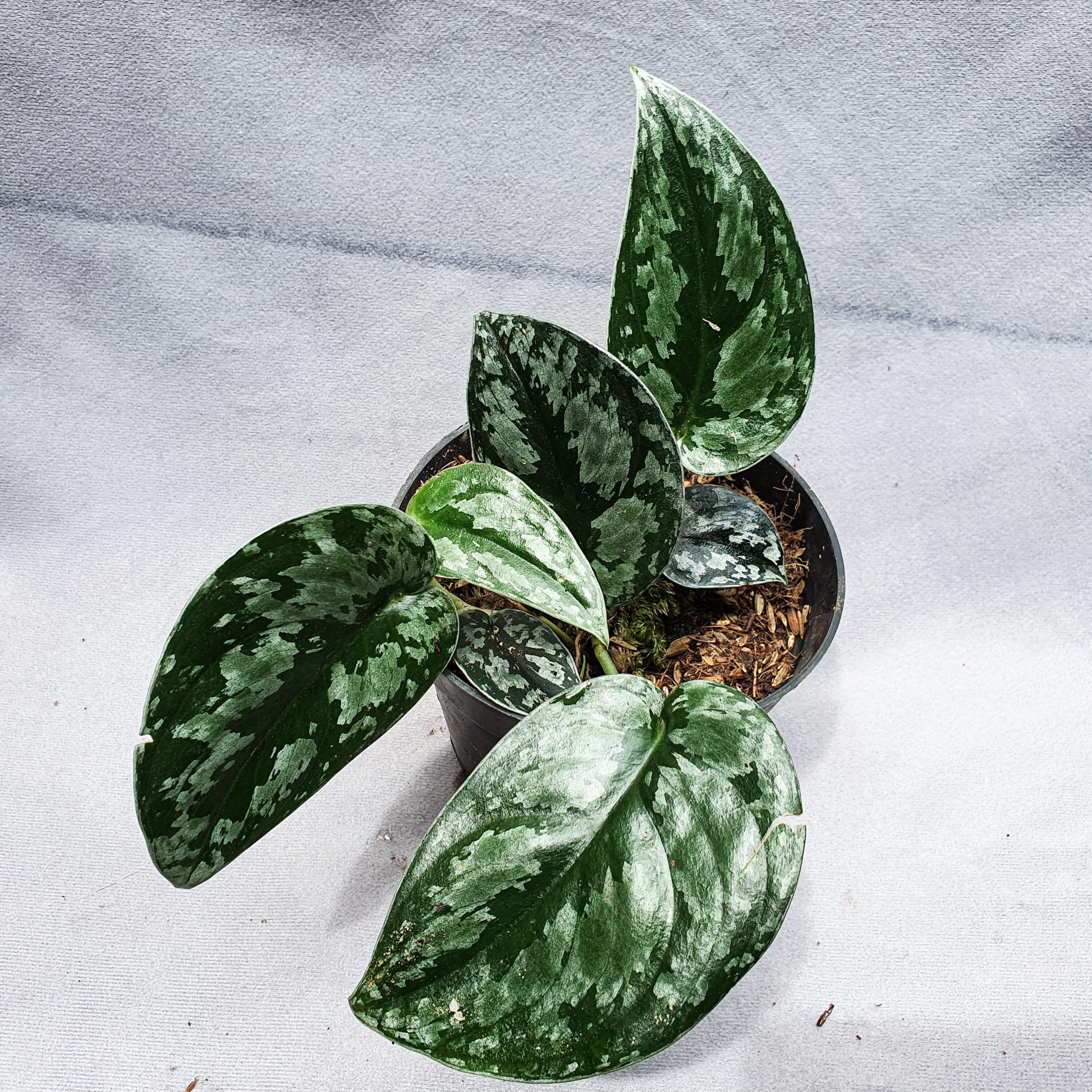
Kew accepts Scindapsus as a genus but does not list Scindapsus tricolor as an accepted species. The authoritative references reviewed also do not establish Tricolor as a registered cultivar, an Exotica synonym, S. pictus, S. treubii or a named Borneo locality form. Commercial labels conflict, so this guide preserves uncertainty instead of inventing a lineage.
What Scindapsus sp. Tricolor looks like
The useful field mark is a layered pattern repeated through the vine. In Greenboog’s photographs, broad juvenile leaves carry a very dark green base, areas of medium or lighter green, and silver-gray marks that reflect light differently from the green tissue. Those visual zones create the three-tone effect. They do not prove three genetically separate pigments, and they should not be rewritten as green, white and pink.
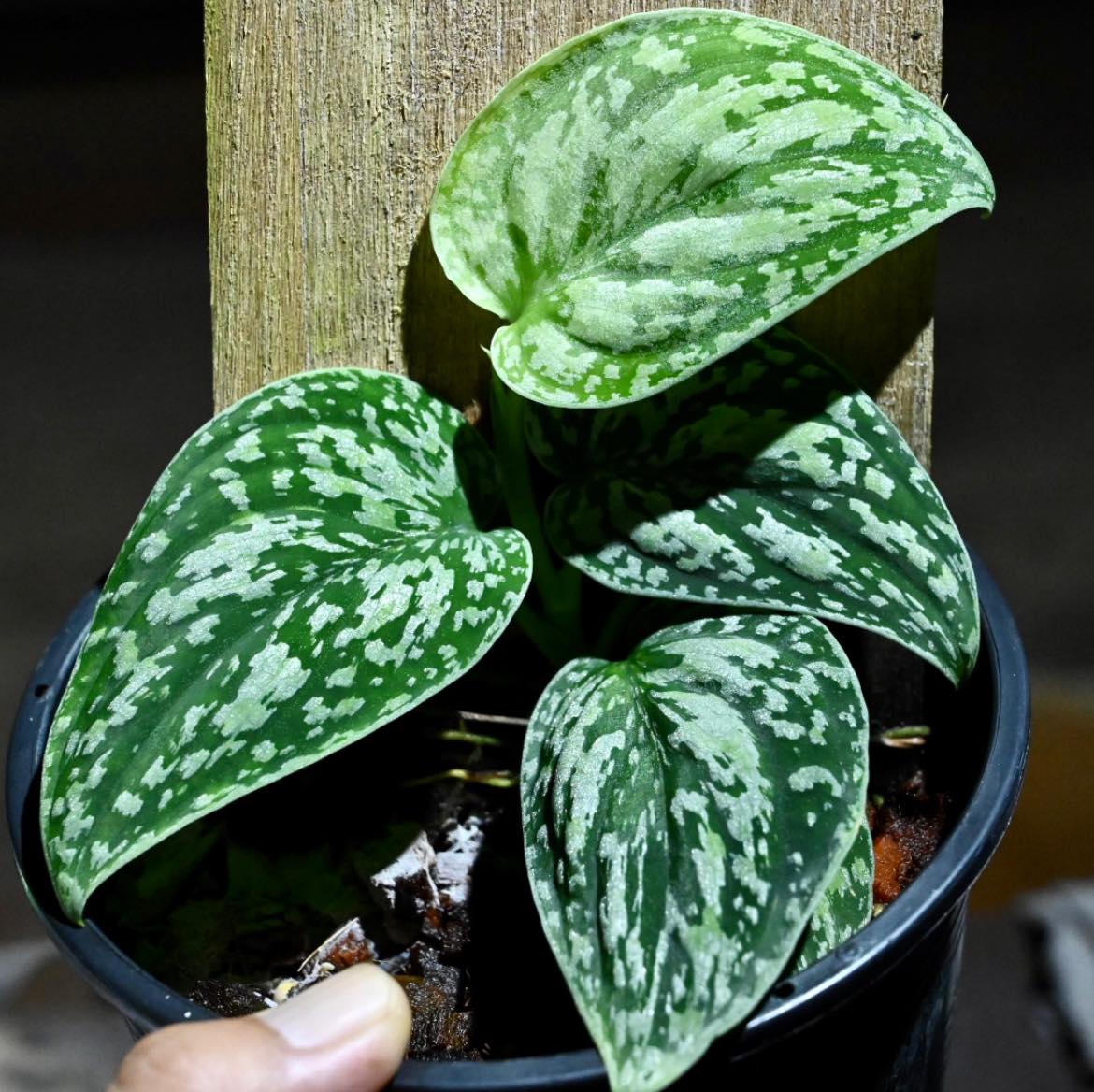
Leaf proportions, pattern density and surface appearance vary with growth stage and viewing angle. The silver can look pale gray in diffuse light, while hard side light can make the mid-green appear neon and the darkest areas almost black. Three colors should be documented across the plant, not invented by exposure.
Tricolor vs Exotica, Silver Lady and Platinum
These are horticultural trade comparisons, not a botanical key. Sellers may apply names to different mother lines, and young leaves can overlap. Compare several leaves at the same stage, ask for the source name and keep the exact plant in view. The Scindapsus types guide owns the broader species-and-trade-name framework.
Use the pattern tendency to decide what evidence to request—not to certify a plant from one leaf.
| Trade name | Useful visual tendency | Best confirmation | Common mistake |
|---|---|---|---|
| Tricolor | Dark ground, intermediate green and silver-gray repeated across several leaves | Whole vine, neutral-light images and documented source line | Calling one neon-looking or near-black exposure a distinct color form |
| Exotica | Often broader, rounder and matte with dark-green and silver dappling | Mature shape plus repeated pattern from traceable mother stock | Treating Tricolor as an automatic Exotica synonym |
| Silver Lady | Commonly narrower and more extensively silver with green marks | Several consecutive leaves and seller provenance | Using silver coverage alone to identify a juvenile cutting |
| Platinum | Usually sold with a more continuous silver field and less green dappling | Repeated full-leaf field, shape and documented line | Calling an overexposed Tricolor photograph Platinum |
Ask for one uncropped frame containing the active tip, stem and at least four leaves. If all three visual zones persist across that sequence under even light, the Tricolor label is better supported. A single spectacular leaf, edited black point or anonymous marketplace caption is weaker evidence.
Color is not a light meter
Bright filtered light is a sensible starting point for a climbing aroid, but no reviewed authority shows that a particular brightness preserves three fixed Tricolor bands. More light does not authenticate the name, and strong direct exposure can scorch tissue or distort a photograph before it improves useful growth.
After shipping or relocation, change exposure gradually and judge the next leaves, internode spacing and growth rate together. A tan patch concentrated on the window-facing surface suggests heat or sun injury; slow growth can also reflect cool conditions, root stress or acclimation. Do not chase a seller image by repeatedly moving the plant brighter.
Keep the root zone airy, then water from evidence
An aerated medium is a useful goal, not a universal recipe. Bark, coarse mineral particles, coir and potting substrate can each contribute, but the correct balance depends on particle size, pot shape, root mass and local dry-down. The same ingredient list behaves differently in a small vented pot and a deep decorative container.
Water thoroughly, allow excess to drain and reassess pot weight plus moisture below the surface. A fixed top-inch rule can miss a wet center or keep a small fast-drying root ball thirsty. Curling and droop may accompany drought, but damaged roots, heat and transport can produce similar symptoms. The complete Scindapsus care guide owns the broader watering, substrate, feeding and pest framework.
Let it climb or trail without promising larger leaves
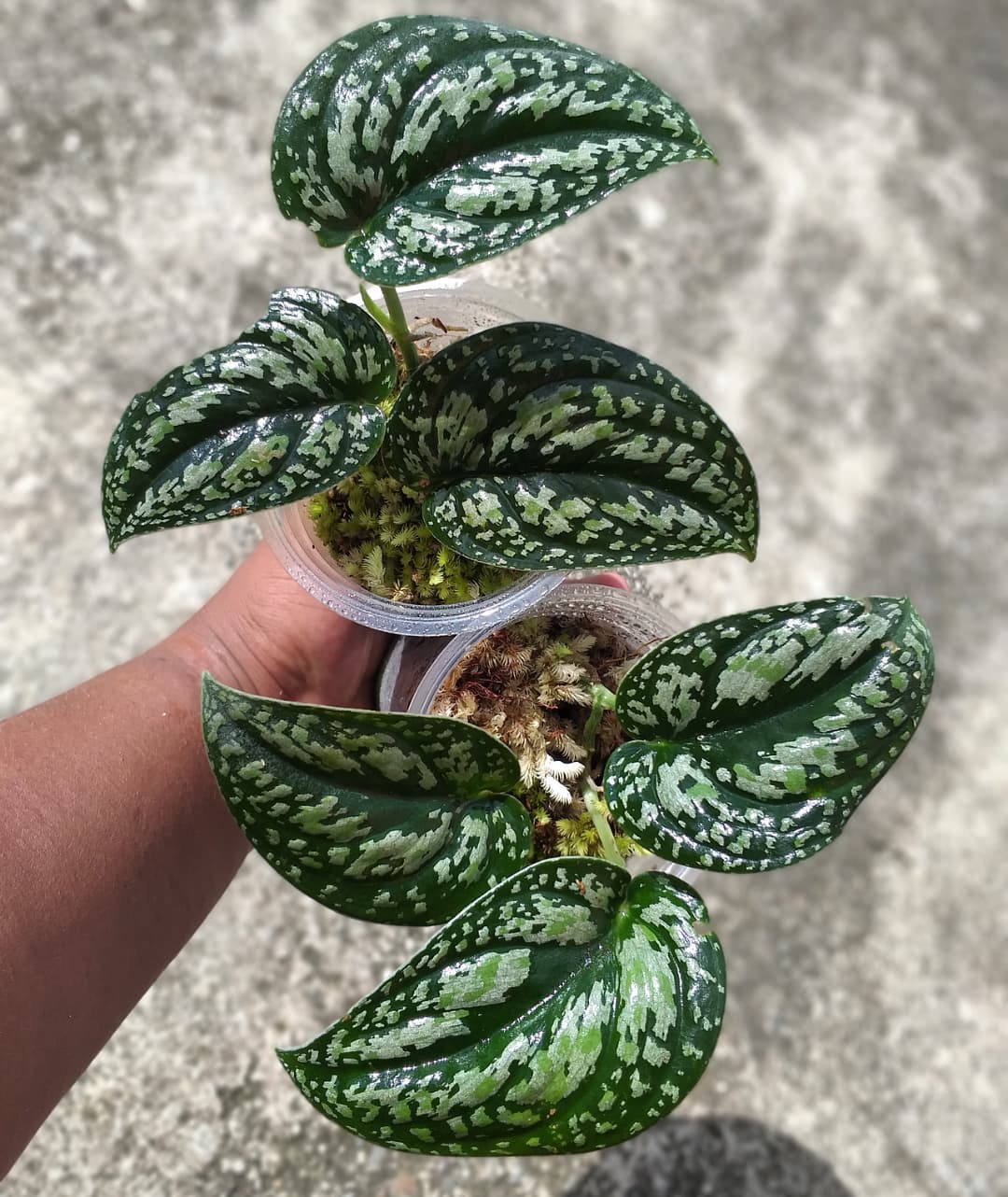
Scindapsus is an evergreen climbing genus, and a Tricolor vine can be displayed climbing or trailing. A board or textured pole can stabilize the stem and create a compact presentation. Support may help a healthy vine express its climbing habit, but it does not guarantee larger leaves; maturity, usable light, roots and growing conditions still matter.
Attach the stem without pinning petioles or the active tip. For propagation, a cutting needs a viable stem node; a detached leaf is not a complete vine cutting. Use the Scindapsus propagation guide for node selection, rooting options and the transition after roots form.
Inspect the exact Tricolor before buying
Rarity, origin, ease and price are commercial claims that change with region and stock. The reviewed evidence does not justify presenting every Tricolor as a rare Borneo plant or promising a particular locality. For current availability, size, pot, rootedness and shipping format, use the published Scindapsus sp. Tri Color product listing. Browse the Scindapsus collection when comparing live inventory.
- Confirm whether the photograph shows the exact plant, a representative batch or a mature reference.
- Request several connected leaves in one neutral-light frame.
- Look for the dark, intermediate-green and silver-gray zones across the vine.
- Ask what source line supports the label; keep sp. if the species is unresolved.
- Inspect the active tip, stem, nodes and any visible root or pest stress.
- Verify rootedness, pot, substrate and acclimation separately from the leaf pattern.
Read symptoms before changing care
A symptom narrows the investigation; it rarely proves one cause by itself.
| What you see | Check first | Useful response | Avoid |
|---|---|---|---|
| Colors look different after moving | Angle, white balance, leaf age and exposure | Hold conditions steady and compare the next leaf in neutral light | Increasing direct sun to force contrast |
| Curling or droop | Moisture below the surface, pot weight, roots and recent heat | Correct the verified cause and then allow recovery time | Watering from curl alone |
| Tan dry patch | Window-facing position and abrupt exposure change | Reduce harsh direct exposure and acclimate gradually | Assuming every brown mark is low humidity |
| Wet mix and stalled growth | Drainage, root condition, container depth and temperature | Restore aeration and revise watering from actual dry-down | Adding fertilizer to stressed roots |
Frequently asked questions
Is Scindapsus Tricolor the same as Pothos Neon?
No. Pothos Neon is not an alternative name for the photographed Greenboog Tricolor. The legacy article’s green-yellow-lime description conflicts with the authentic plant images and should not be retained.
Is Tricolor a Scindapsus pictus or treubii cultivar?
The reviewed authoritative sources do not resolve that question. Commercial sellers use conflicting species and locality labels. Keep Scindapsus sp. Tricolor unless provenance or a reliable taxonomic determination supports a narrower name.
What are the three colors?
In Greenboog’s documented stock, the practical visual description is dark green, intermediate green and silver-gray. Exposure can shift how each zone reads, so check the pattern across multiple leaves.
Does brighter light guarantee stronger Tricolor contrast?
No. Bright filtered light supports growth, but the reviewed evidence does not establish a guaranteed color response. Direct exposure can also scorch leaves or exaggerate contrast in photographs.
Is Scindapsus sp. Tricolor safe for pets?
The exact species is unresolved. ASPCA lists S. pictus as toxic because of insoluble calcium oxalates, but that nearby trade context is not species proof. The prudent approach is to treat this plant as unsafe to ingest and keep it away from children and pets.
Evidence notes
Kew Plants of the World Online supports the accepted Scindapsus genus, its climbing habit and accepted species list; RHS also supports the genus-level climbing habit. NC State’s S. pictus profile supplies nearby horticultural context but does not identify Tricolor. ASPCA’s S. pictus record is used only for a clearly bounded ingestion-safety precaution. Canopy Plant Co. contributes commercial silver/green/black vocabulary, while Costa Farms contributes trade comparison language for Exotica, Silver Lady and Platinum. None of those commercial sources resolves Tricolor taxonomy or locality.
