
Greenboog Monstera recovery triage
Do not fertilize, repot and spray on the same day. Isolate the plant, inspect it from roots to growing tip, record the recent history and change the one condition most strongly supported by the evidence.
Match the whole-plant pattern to the next check before choosing a treatment.
| What you see | Check next | First safe action |
|---|---|---|
| Wilted leaves, pot stays wet | Soft or collapsing roots, odor and blocked drainage | Stop watering and inspect the root system. |
| Wilted leaves, mix pulled from pot edge | Dry root ball, very light pot and water bypass | Rehydrate thoroughly, drain, then reassess. |
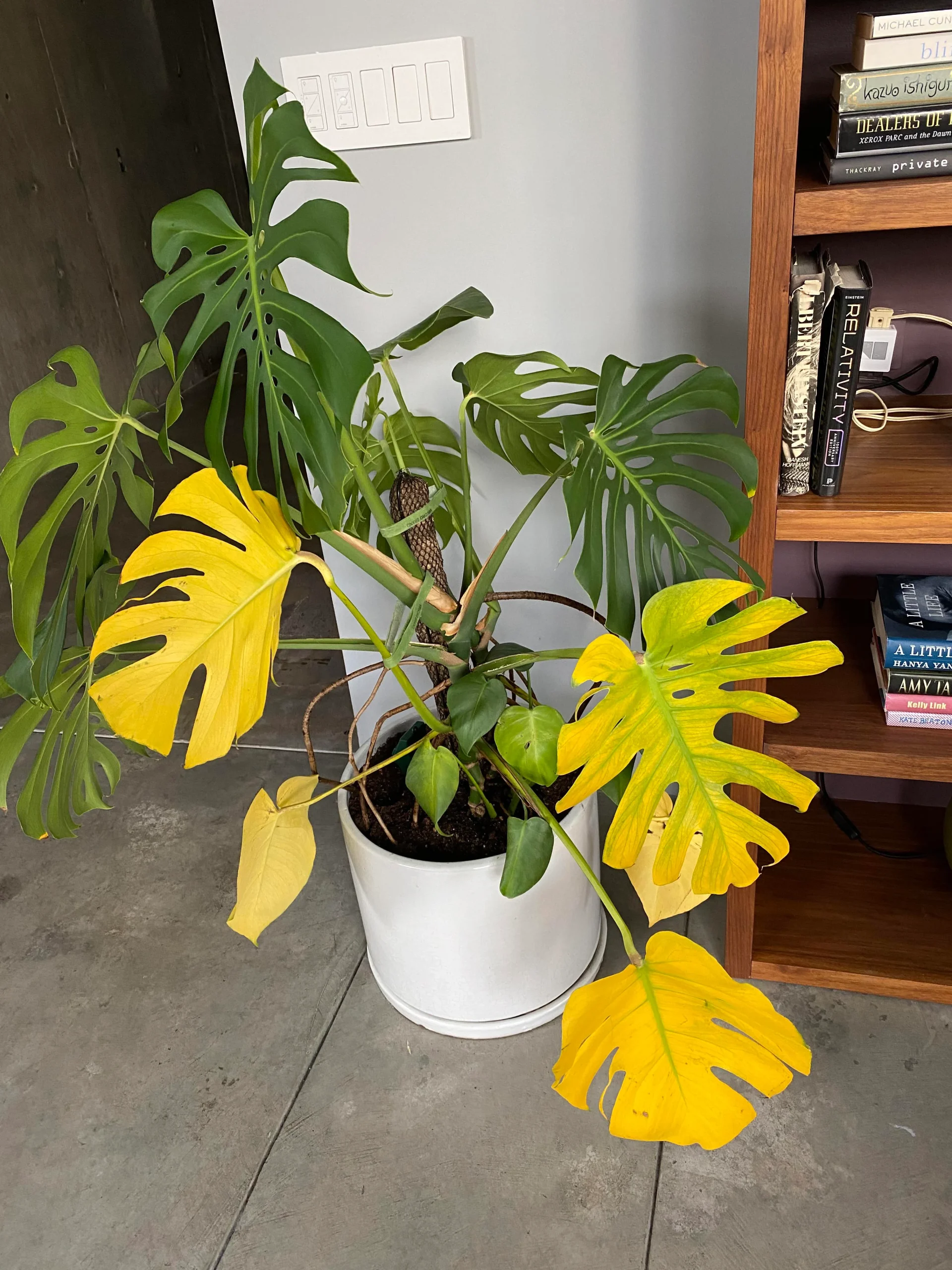
| Widespread yellowing | Root moisture, recent feeding, light and cold | Correct the confirmed root or environmental issue. |
| Fine pale speckles or webbing | Leaf undersides, petiole joints and folded new growth | Isolate and identify the pest before treatment. |
| Black, soft stem near soil | How far firm tissue extends above the damage | Prepare a clean salvage cut if a healthy node remains. |
| One old leaf yellowing | Whether the rest of the plant is growing normally | Observe before making a whole-plant intervention. |
Can this Monstera still be saved?
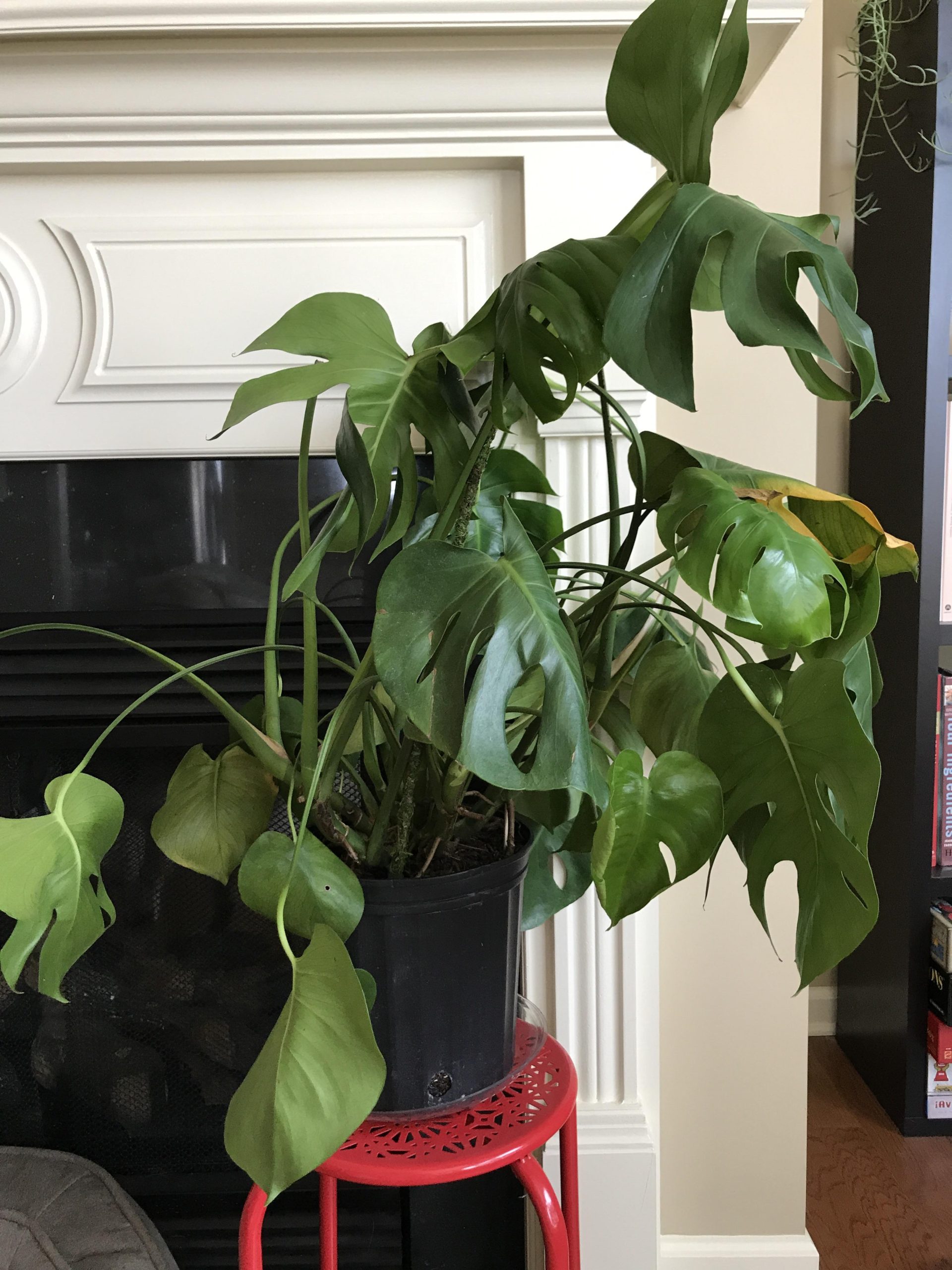
Start with the stem and nodes. A firm green stem, a solid node and an intact axillary bud give the plant a path to new growth even if several leaves are lost. Healthy roots are usually firm and pale to tan. Older roots can be darker without being rotten; texture and odor matter more than color alone.
A plant is a poor recovery candidate when rot has made every node and the entire crown soft, black or hollow. If one healthy section remains above the damage, it may be safer to propagate that section than keep a collapsing root system attached. A leaf and petiole without a node cannot produce a new vine.
Five steps to revive a Monstera
1. Isolate and record the starting condition
Move the plant away from the rest of the collection, especially if you see insects, sticky residue, webbing, spreading spots or soft tissue. Photograph the whole plant, both sides of affected leaves, the stem and the potting mix. Record the last watering, fertilizer, repot, shipment, temperature event and pesticide use.
This history prevents random treatment. Penn State Extension’s diagnostic key shows that the same symptom—such as wilt or dead leaf margins—can follow several unrelated causes.
2. Check the root zone before the leaves
Feel the mix at more than the surface and lift the pot. Confirm that drainage holes are open and that the container is not standing in water. If the plant is wilted while the root ball is wet, slide it out carefully and inspect the roots. If the mix is dry and has pulled from the pot, test whether water runs around the root ball without wetting it.
3. Correct the confirmed cause
Choose the branch supported by your inspection: remove failing root tissue and excess wet mix, rehydrate a dry root ball, improve light gradually, protect the plant from cold or heat, or identify and manage a pest. Avoid stacking treatments “just in case.”
4. Remove only tissue that is dead or spreading a problem
Brown and yellow tissue will not turn green again, but a partly damaged leaf may still photosynthesize. Remove soft rotting stem, collapsed roots and clearly infected tissue first. Cosmetic pruning can wait until the plant is stable.
5. Stabilize and watch for new evidence
Return the recovering plant to warm, bright filtered light and a predictable root environment. Do not keep moving it to “better” spots every few days. Recovery is shown by firm tissue, stable moisture use, active root tips or a moving growth point—not by an old yellow leaf becoming green again.
If the soil is wet: inspect for root failure
A Monstera can wilt in wet soil because damaged roots cannot supply the leaves. University of Wisconsin’s Plant Disease Diagnostics Clinic lists wilt despite wet soil, stunting, discolored foliage and soft brown roots with a possible bad odor as root-rot signs.
- Remove the inner pot from any cachepot and discard standing water.
- Slide out the root ball while supporting the stem.
- Separate firm roots from soft, hollow or slipping tissue.
- Cut collapsed roots with a clean tool; sanitize the tool and work surface afterward.
- Repot into a clean, correctly sized container with open drainage and fresh, aerated mix.
- Water enough to settle the mix, let it drain fully, then wait for the root zone to approach the next appropriate dry-down before watering again.
Do not add rocks to the pot bottom as a root-rot fix. Wisconsin’s guidance warns that a gravel layer can inhibit drainage rather than improve it. Do not reuse suspect potting mix or drained water around other plants.
If the soil is dry: rehydrate without flooding the routine
A severely dry mix may shrink from the pot and repel water. Apply room-temperature water slowly across the surface until the entire root ball is wet, or soak the inner pot briefly and let it drain completely. Do not leave it standing in water afterward.
Then investigate why it dried too far: a small pot full of roots, hydrophobic old mix, hot airflow, a sudden light increase or an inconsistent watering interval. Use pot weight and moisture within the root zone rather than a rigid weekday schedule. Our Monstera watering guide explains that routine in detail.
If you see insects or spreading spots
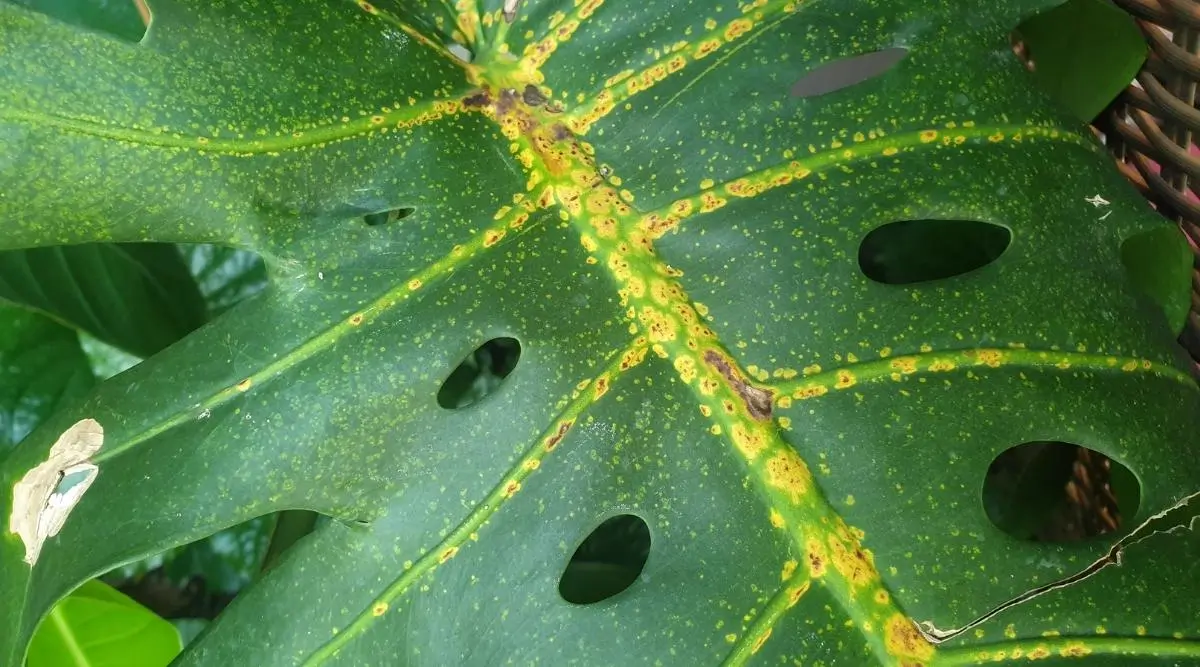
Inspect leaf undersides, petiole joints, the newest folded leaf and the stem. Fine stippling and webbing suggest mites; silvery scarring and dark specks can accompany thrips; cottony clusters suggest mealybugs; hard bumps and sticky residue can indicate scale. Confirm the organism before choosing a treatment.
Penn State Extension recommends isolation, regular monitoring and sanitation of tools used on affected houseplants. Clean accessible insects and debris, follow the label of a product approved for that pest and indoor use, and repeat inspection through the pest’s life cycle. More pesticide is not a substitute for correct identification.
For leaf spots, mark or photograph the edge and watch whether it expands. Keep leaves dry, improve spacing and remove tissue that is clearly spreading a problem. A bruise, cold-water mark or chemical injury can look like disease, so do not spray a fungicide solely because a spot is brown.
Check light, heat, cold and recent changes
Environmental injury often follows a specific event. Bleached tan patches on the window side can follow abrupt direct sun. Blackened, limp tissue can follow cold glass, an air-conditioning vent or cold transport. Long internodes and small new leaves point toward inadequate light or support rather than an emergency watering problem.
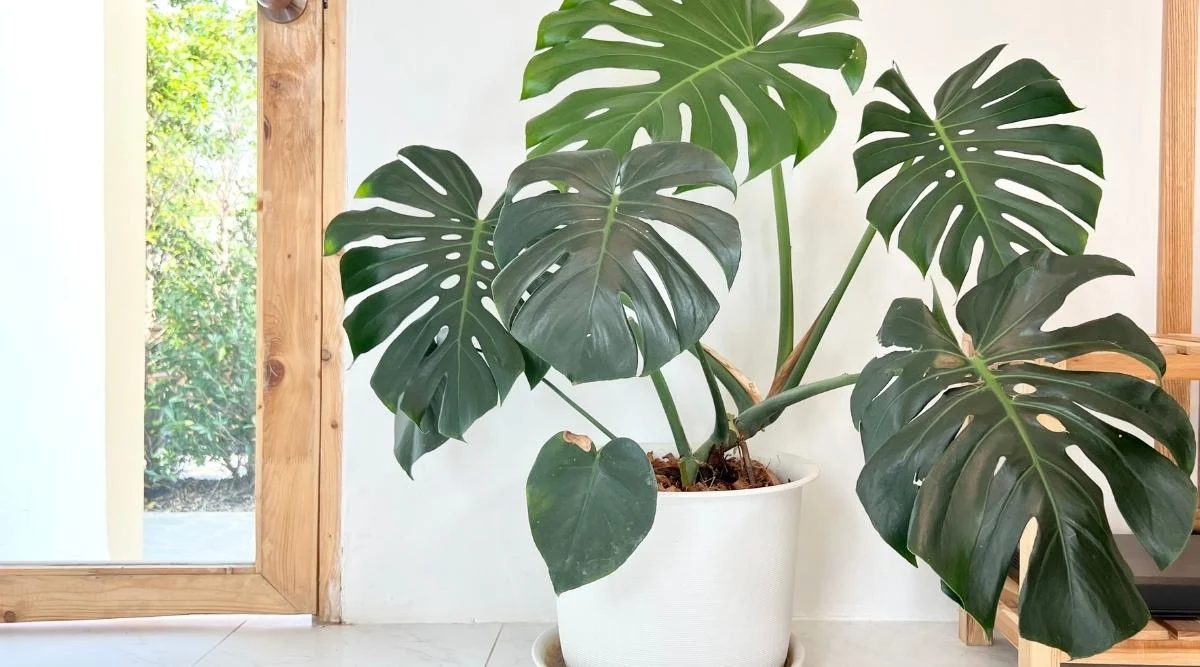
NC State Extension recommends moderate brightness without direct sun, warm indoor temperatures, thorough watering followed by partial dry-down, and sturdy support. Move a stressed plant gradually toward better light; do not put it into hard midday sun because it looks weak.
When and how to prune a declining Monstera
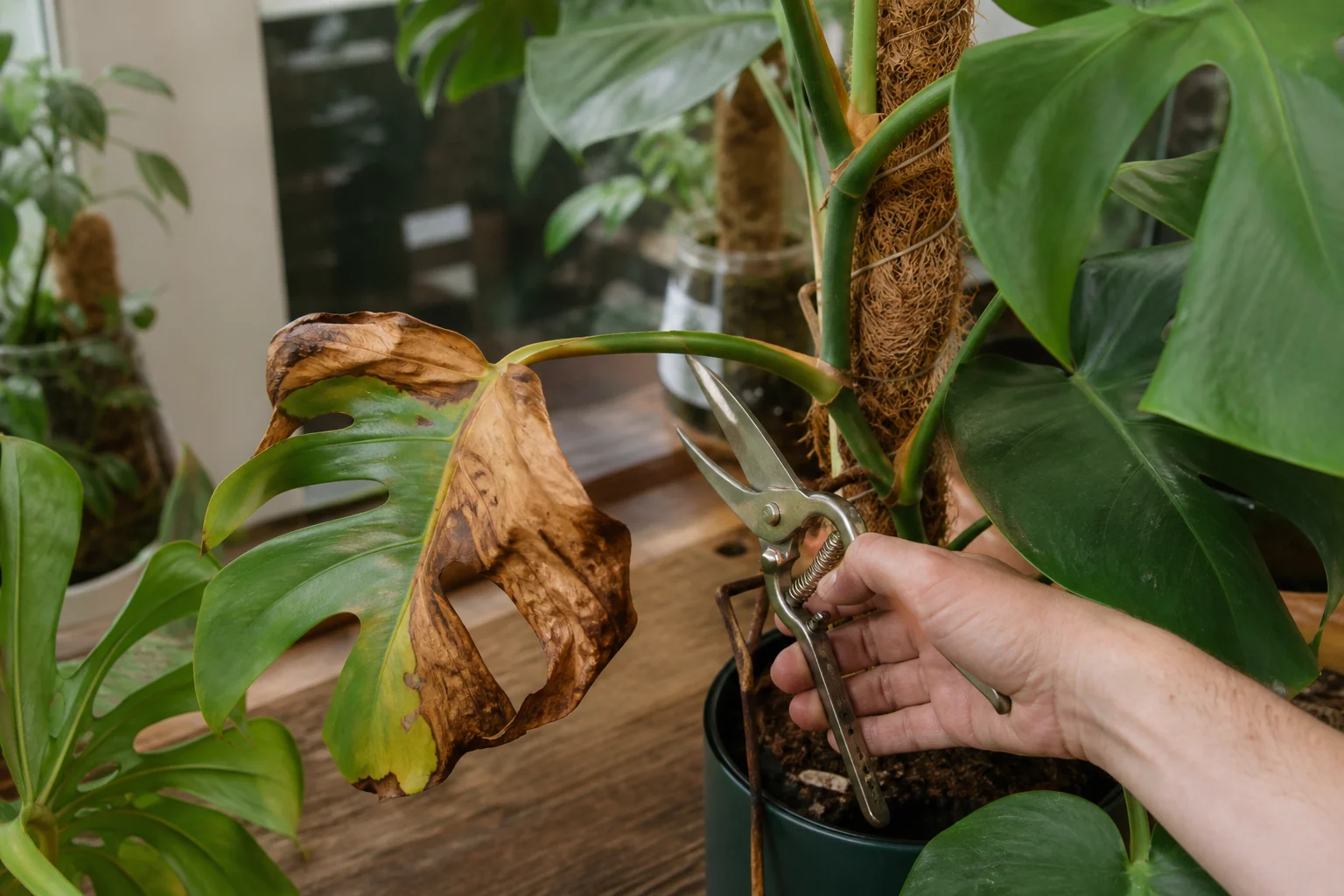
Use clean, sharp pruners. Remove a fully collapsed leaf by cutting its petiole without nicking the main stem. Remove soft stem back to firm, clean tissue. Sanitize the blades between suspicious cuts so you do not carry debris from rotted tissue into a healthy section.
Do not strip every marked leaf from a weak plant. A green portion can still help power root and shoot recovery. For a detailed brown-pattern and pruning decision, see Monstera leaves turning brown.
Salvage propagation when the base is failing
If rot is moving up the stem but a healthy node remains, take a salvage cutting before all viable tissue is lost. Cut above the damaged area into firm tissue. The section must include a node and axillary bud; an aerial root is useful but not sufficient by itself.
University of Minnesota Extension notes that leaves and petioles without a node cannot produce new Monstera growth. Root a viable section in a clean medium you can monitor, keep it warm and avoid burying the bud in saturated material.
Recovery conditions: keep the plan boring
- Light: bright, filtered and stable; increase gradually if the plant came from dim conditions.
- Temperature: warm and away from hot, cold or drying air streams.
- Water: based on root-zone moisture and pot weight, not anxiety or a fixed calendar.
- Humidity: stable room humidity is more useful than repeatedly wetting damaged foliage.
- Fertilizer: wait until roots and active growth are functioning; fertilizer cannot repair rot.
- Support: secure the climbing stem, not the moving petioles.
Once the plant is stable, return to the baseline in our Monstera care guide. Resist daily interventions. Roots need oxygen and time; a growth point needs steady conditions more than constant handling.
How to tell whether recovery is working
Use a short log instead of judging the plant hour by hour. Record pot weight or root-zone moisture, stem firmness and the position of the newest growth point.
- the stem and node remain firm rather than darkening or collapsing;
- the pot begins using water at a predictable rate;
- new root tips are firm and light-colored;
- an axillary bud swells or the active leaf spear advances;
- damage stops expanding, even if old leaves remain marked.
Root recovery can take weeks, and a severely cut-back node can take longer to activate. If rot continues to move, pest numbers rise or the stem softens despite the correction, reassess the diagnosis. For a valuable specimen, a local extension diagnostic clinic or experienced plant professional can help distinguish disease from cultural stress.
Frequently asked questions
Should I water a drooping Monstera immediately?
Not until you check the root zone. Both a dry root ball and failing roots in wet mix can produce wilt. Watering without that distinction can worsen the wet-root case.
Will yellow Monstera leaves turn green again?
Usually not. Judge recovery by stable stems, functioning roots and healthy new growth. Keep a partly green leaf if it is still useful and not carrying a spreading problem.
Should I repot a sick Monstera?
Repot when the root inspection identifies rotted roots, collapsed mix, blocked drainage or a container mismatch. Repotting is not automatically helpful for cold injury, pests or a brief dry spell, and it adds another stress.
Can I fertilize a Monstera to make it recover faster?
Wait until roots are functioning and growth has restarted. Concentrated fertilizer around damaged roots can add salt stress. Correct water, oxygen, light and temperature first.
When should I replace the plant?
Sources and recovery references
- Penn State Extension: symptom-based plant diagnosis
- University of Wisconsin Horticulture: root rot in houseplants
- Penn State Extension: indoor-plant pests, disease and sanitation
- NC State Extension: Monstera deliciosa growing conditions and safety
- University of Minnesota Extension: viable nodes, buds and Monstera propagation

My monstera just all of a sudden started to lose its beautiful green color, and turned an ugly olive green. I noticed the leaves withered first before the change in color. All the leaves are gone now; I’m in the process of cutting the stems up now, but then I thought of googling it first before just completely destroying it … It was so beautiful before.
The damage started though because it was near my air conditioner last year; I googled it, and it stated that it shouldn’t be in air … Could that be the problem now?… HELP!!!
I understand your frustration! Monsteras are beautiful plants, and losing all the leaves can be disheartening. While it sounds severe, there might still be hope for your Monstera. Here’s what could have happened and how to potentially revive it:
Air Conditioner Exposure: You’re right, cold drafts and dry air from air conditioners can stress Monsteras. This could have weakened your plant last year, making it more susceptible to other issues.
Possible Culprits for Olive Green and Withering:
Overwatering: Cold temperatures can slow down evaporation, so even if you watered normally, the roots might have been sitting in soggy soil for too long. This can lead to root rot, causing the leaves to wither and turn olive green before dropping.
Nutrient Deficiency: Without enough light or nutrients, Monsteras can lose their vibrant green color.
What to Do Now:
Check the Stems: Before completely cutting them, inspect the base of the stems closely. If they are firm and not mushy, there’s still a chance!
Adjust Watering: Wait until the top inch of soil feels completely dry before watering again.
Increase Humidity: Since dry air might have been an issue, consider using a humidifier near your Monstera (not right next to it though).
Provide Warmer Location: Move your Monstera away from any drafts and air conditioners. Aim for a room temperature between 65-85°F (18-29°C).
Consider Light and Fertilizer: If there’s not enough natural light, look into supplementing with a grow light. Once new growth appears, you can also consider a balanced fertilizer for Monsteras.
Here’s the good news: Monsteras are known for their resilience. If the stems are healthy, with proper care, there’s a chance you might see new growth sprouting from the nodes (little bumps) on the stems. It might take some time, but with patience, your Monstera could surprise you!
If you’re unsure about the stem health or need further guidance, consider consulting a local nursery or plant specialist. They can give you a more personalized assessment based on your Monstera’s specific situation.